

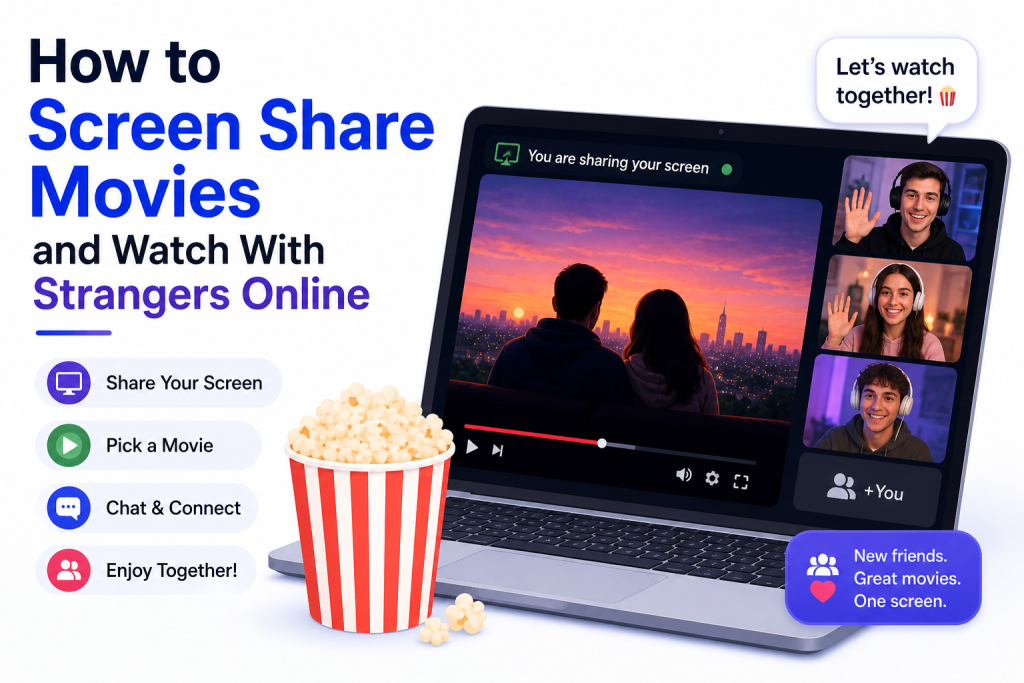
Watching a movie alone is easy. Watching it with strangers from around the world—that’s where things get interesting.
In recent years, more people have started using random chat platforms and simple screen-sharing tools to recreate that “watch together” feeling online. Whether you’re casually chatting or trying to build a shared experience, it’s surprisingly easy to turn a one-on-one conversation into a mini movie night.
If you’ve ever wondered how people do this on platforms like OmeTV or similar spaces, the process is simpler than it seems—but there are a few things worth understanding first.
What “Watching Together” Actually Means Online
When people talk about watching movies with strangers online, they usually mean one of two things. The first is screen sharing, where one person plays the movie and shares their screen so the other person can watch. The second is syncing playback, where both people play the same movie at the same time while staying connected through chat or video.
Random chat platforms like Omegle don’t always have built-in features for this, so users often combine them with external tools. Others prefer more structured platforms like CooMeet, where conversations tend to be more stable, making it easier to coordinate something like a shared viewing.
The Simple Way: Screen Sharing
The most straightforward method is screen sharing. You play the movie on your device and share your screen during the conversation.
Some people do this using:
- Browser-based screen sharing tools
- Video call platforms (like meeting apps)
- Built-in sharing features, if available
The key here is simplicity. You don’t need perfect synchronization—just a stable connection and clear communication. If the other person can see your screen and hear the audio, that’s enough to get started.
That said, not all random chat platforms Vidizzy support screen sharing directly. In many cases, users switch to another app after connecting, especially if they want better quality or fewer interruptions.
The Better Experience: Syncing a Movie
If you want a smoother experience, syncing is usually better than sharing.
Instead of streaming your screen, both people open the same movie on their own devices and press play at the same time. It might sound basic, but it solves a lot of common issues like lag, poor audio, or blurry video.
Some tools are specifically designed for this kind of experience, allowing you to:
- Pause and play together
- Stay in sync automatically
- Chat alongside the movie
Even when using random chat platforms, people often switch to these tools once they find someone they want to continue watching with.
What Actually Makes It Work
The technical side is only half the experience. What really matters is how you approach the interaction.
Since you’re watching with a stranger, communication plays a big role. A quick “ready?” before pressing play or reacting to scenes as they happen makes the experience feel shared rather than passive.
It also helps to choose something light and easy to follow. Not everyone will have the same taste, and long or complex movies can make things feel awkward if the connection doesn’t last.
In many cases, shorter videos or familiar content work better than full-length films—at least at the start.
Things to Be Careful About
While the idea is simple, there are a few things to keep in mind.
Content rules still apply, even when screen sharing. Most platforms have guidelines about what can be shown, and sharing copyrighted or inappropriate material can sometimes lead to restrictions.
Privacy is another factor. Screen sharing means the other person can see everything on your screen, so it’s important to close unrelated tabs or personal information before starting.
And finally, not everyone you meet will be interested in watching something together. That’s normal. The experience works best when both people are naturally on the same page.
A More Natural Way to Connect
What makes this idea appealing isn’t just the movie—it’s the shared moment. Watching something together creates a small sense of connection, even if the conversation started randomly.
On platforms where interactions are usually brief, this adds a different layer. Instead of skipping quickly, people stay a little longer, react a little more, and sometimes even continue the conversation beyond the movie.
It doesn’t need to be perfectly planned. Often, the simplest setups lead to the most natural experiences.
Final Thoughts
Screen sharing movies with strangers isn’t complicated, but it does work best when you keep things simple. Start with a conversation, see if there’s mutual interest, and then choose a method that feels easy for both sides.
Whether you’re experimenting on random chat platforms or moving to a more stable setup, the goal isn’t perfection—it’s just sharing a moment with someone new.
