

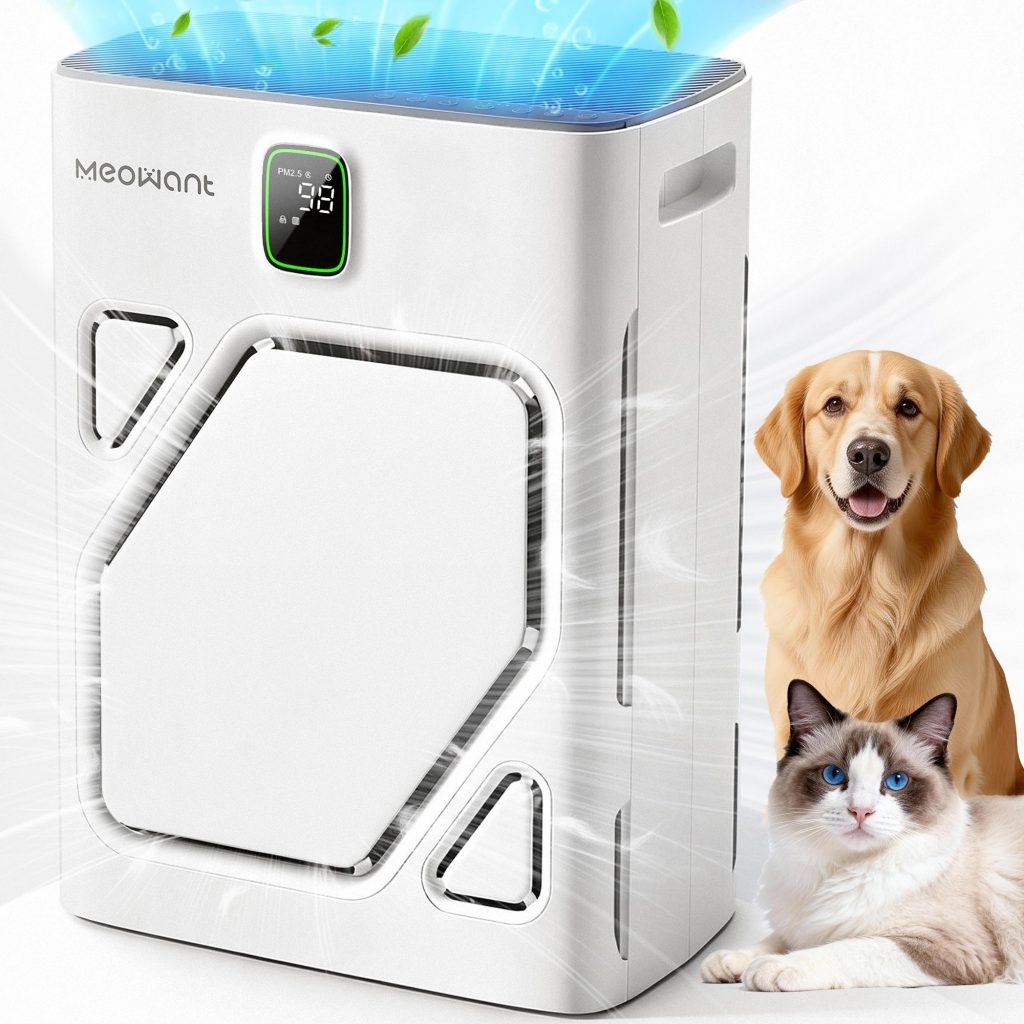
Living with pets brings immeasurable joy, but it also introduces unique challenges to your indoor air quality. Pet dander, fur, and odors continuously circulate through your home, triggering allergies and respiratory discomfort for family members who are sensitive to these airborne irritants. For many households, simply opening a window or vacuuming regularly isn’t enough to combat the persistent particles that pets release into the air every day.
Pet air purifiers offer a targeted solution designed specifically to address these concerns, filtering out the microscopic allergens and neutralizing odors that traditional cleaning methods miss. However, choosing and using an air purifier in a pet-friendly home requires careful consideration of both safety and maintenance. In this guide, we’ll explore how to keep your air purifier operating safely around curious animals and why consistent upkeep—particularly pre-filter maintenance—is essential for long-term performance. Whether you’re dealing with a shedding dog, a dander-producing cat, or multiple furry companions, this article will help you create a cleaner, healthier living space for everyone in your household.
Why Pet Air Purifiers are Essential for Home Air Quality
Every pet in your home is a constant source of airborne pollutants, even the cleanest and most well-groomed ones. Dogs and cats shed microscopic flakes of skin known as dander, which become airborne and settle on furniture, bedding, and clothing. Pet hair acts as a carrier for these particles, along with pollen, dust mites, and bacteria that cling to fur. Beyond visible shedding, pets produce odors from their skin oils, saliva, and litter boxes that permeate living spaces over time.
The health impacts on families are significant. Prolonged exposure to pet allergens can trigger chronic nasal congestion, itchy eyes, skin rashes, and asthma flare-ups—even in individuals who didn’t previously show sensitivities. Children and elderly family members are particularly vulnerable to degraded air quality, as their respiratory systems are less equipped to handle continuous allergen exposure.
Pet air purifiers address these concerns through specialized home air filtration systems that continuously cycle room air, capturing particles as small as 0.3 microns. Unlike general-purpose models, they’re engineered to handle the heavier particle loads that pets generate. By running consistently, these purifiers maintain stable air quality throughout the day, reducing allergen accumulation and keeping odors from building up between deep cleanings. The result is a noticeably fresher environment where both pet owners and their animals can breathe more comfortably.
Understanding Pet Allergens and Effective Air Filtration
Pet allergens aren’t limited to the visible fur clinging to your couch. The primary culprits are proteins found in animal dander, saliva, and urine. When cats groom themselves, allergenic proteins from their saliva dry on their fur and become airborne as microscopic particles. Dogs produce similar proteins through skin secretions that flake off continuously. These allergens are remarkably persistent—they remain suspended in the air for hours and can linger in a home for months after a pet has been removed.
What makes pet allergens particularly challenging is their size and behavior. Many measure less than 10 microns, making them invisible to the naked eye and light enough to stay airborne with minimal disturbance. Walking across a room, turning on a fan, or even sitting on upholstered furniture sends settled allergens back into circulation. They also adhere stubbornly to soft surfaces, creating reservoirs that continuously re-contaminate indoor air.
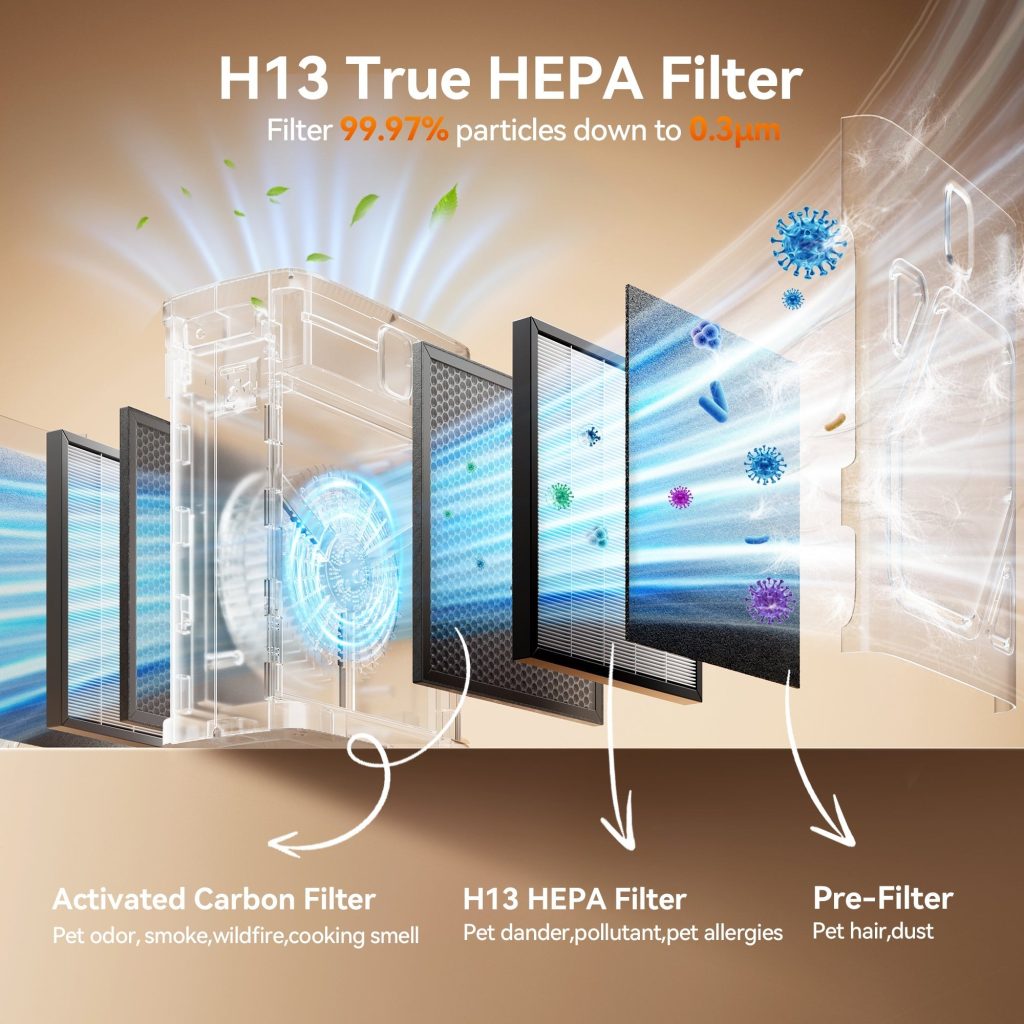
Pet air purifiers combat this cycle through multi-stage home air filtration. A true HEPA filter captures 99.97% of particles down to 0.3 microns, effectively trapping dander and the proteins attached to it. Activated carbon layers absorb volatile organic compounds responsible for pet odors, while pre-filters catch larger debris like floating fur before it reaches the finer filters. This layered approach ensures that allergens are systematically removed from circulation rather than simply redistributed throughout your living space.
Key Safety Features of Air Purifiers for Pet-Friendly Homes
When you share your home with curious cats or playful dogs, an air purifier needs to do more than clean the air—it must operate safely alongside unpredictable animals. Child locks are a critical feature that prevents pets from accidentally changing settings or turning off the unit by stepping on buttons or pawing at controls. Many cats in particular are drawn to the gentle hum and airflow of purifiers, making tamper-resistant panels essential for uninterrupted operation.
Ozone-free certification should be non-negotiable for any pet household. Some purifiers, particularly ionizers and certain electrostatic models, emit ozone as a byproduct. Even at low levels, ozone irritates the respiratory systems of birds, cats, and dogs far more acutely than humans, since animals have smaller lung capacities and higher breathing rates relative to their body size. Look for units explicitly certified as ozone-free by regulatory bodies.
A sturdy, weighted base prevents tipping when a dog’s wagging tail or a cat’s investigative nudge makes contact. Units with a low center of gravity and non-slip feet provide additional stability on hard floors. Quiet operation also matters—purifiers producing excessive noise can cause anxiety in noise-sensitive pets, leading them to avoid rooms where air quality improvement is most needed. Brands like Meowant that focus specifically on the pet care space understand these considerations and design products with animal behavior in mind.
Tips for Safe Placement and Usage Around Pets
Position your purifier on a flat, elevated surface or in a corner where pets are less likely to interact with it directly. Maintain at least a foot of clearance around intake and output vents so that pet beds, toys, or blankets don’t obstruct airflow. Avoid placing units near water bowls where splashing could damage electronics, and route power cords behind furniture or through cord covers to prevent chewing. For homes with birds, keep purifiers in adjacent rooms rather than directly beside cages to avoid drafts that stress avian respiratory systems.
The Importance of Pre-Filter Maintenance for Longevity
The pre-filter is your air purifier’s first line of defense—a mesh or foam layer designed to intercept large particles like pet hair, dust bunnies, and visible debris before they reach the more delicate HEPA and carbon filters deeper inside the unit. In pet-heavy households, this component works overtime. A single dog can shed thousands of hair strands daily, and much of that airborne fur accumulates on the pre-filter within weeks rather than months.
When pre-filter maintenance is neglected, the consequences cascade through the entire system. A clogged pre-filter forces the motor to work harder to pull air through matted layers of fur and dust, increasing energy consumption and generating more noise. Worse, large particles that should have been stopped at the front pass through to the HEPA filter, filling its microscopic pores prematurely. A HEPA filter that should last twelve months might need replacement in six or seven, significantly increasing your operating costs over time.
Beyond filter lifespan, a dirty pre-filter directly compromises air quality. Reduced airflow means the purifier cycles less room air per hour, allowing allergens and odors to accumulate faster than they’re removed. You might notice your home smelling stale or family members experiencing allergy symptoms despite the purifier running continuously. Establishing a regular pre-filter maintenance schedule—checking it biweekly and cleaning it at least monthly—keeps the entire system performing at peak efficiency and extends the useful life of every filter stage in your purifier.
A Step-by-Step Guide to Maintaining Your Pet Air Purifier
Keeping your pet air purifier in top condition requires a consistent routine rather than occasional deep interventions. Start by establishing a weekly visual inspection—glance at the exterior vents for visible fur buildup and listen for changes in motor sound that suggest restricted airflow. Once a month, perform a full performance check by holding a tissue near the output vent to gauge airflow strength. If suction feels noticeably weaker than when the unit was new, it’s time for immediate filter attention.
How to Clean and Maintain the Pre-Filter
Remove the pre-filter every two to four weeks in homes with multiple pets, or monthly for single-pet households. Take it outside or over a trash bin and gently vacuum both sides using a brush attachment to lift embedded pet hair. For stubborn buildup, rinse the filter under lukewarm water with a small amount of mild dish detergent, working debris free with your fingers. Allow it to air dry completely—typically four to six hours—before reinstalling, since inserting a damp filter promotes mold growth inside the unit.
When and How to Replace Other Filters
HEPA filters typically require replacement every eight to twelve months in pet homes, though a musty smell or visible discoloration signals earlier need. Activated carbon filters lose effectiveness every three to six months as their absorption capacity saturates with odor compounds. When purchasing replacements, always match the exact model number specified by your purifier’s manufacturer to ensure proper fit and filtration efficiency against pet allergens.
Breathe Easier: Combining Safety, Maintenance, and Clean Air for Pet Homes
Maintaining clean indoor air in a pet-friendly home requires more than good intentions—it demands the right equipment and consistent care. Pet air purifiers serve as an essential tool for removing dander, allergens, and odors that accumulate daily, protecting the respiratory health of every family member while allowing you to enjoy life with your animals without compromise.
Equally important is selecting a purifier with safety features that account for your pets’ natural curiosity. Child locks, ozone-free operation, stable designs, and quiet motors ensure the unit works harmoniously in a household where animals roam freely. And no matter how advanced your purifier’s technology, its effectiveness ultimately depends on your commitment to regular maintenance. Pre-filter care, in particular, serves as the foundation of long-term performance—a simple monthly routine that protects your investment and keeps every filtration stage functioning as intended.
By combining a quality pet air purifier with thoughtful placement and disciplined upkeep, you create an environment where cleaner air becomes the norm rather than the exception. Take a proactive approach to air quality management today, and both your family and your pets will breathe easier for years to come.