

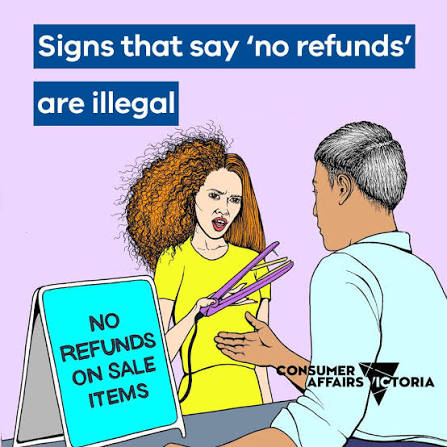
Most people see a “no refunds” sign or a line buried in a receipt and assume the conversation is over. It often is not. A store or company can set its own return policy, but that policy does not erase the legal protections consumers already have. Those protections come from state law, federal rules, and sometimes the contract itself, and they can outrank a posted policy in certain situations.
Understanding the difference between a policy and a right is the first step before you decide whether to push back or walk away.
Policy Versus Legal Right
A refund policy is a business choice. A legal right is something the law gives you regardless of what a sign says. Here is where the two separate:
- Defective or unsafe products. Most states require some remedy, repair, replacement, or refund, when a product does not work as sold, even if the store claims all sales are final.
- Services not delivered as promised. If a company took payment for work it never finished or never performed to the standard it advertised, a no-refund clause rarely protects it from that failure.
- Misleading claims at the time of sale. If a seller promised something that was not true to get you to buy, that can count as a deceptive practice, which is treated differently than simple buyer’s remorse.
- Billing errors and unauthorized charges. These are separate from refund disputes entirely. You can contest a charge you never agreed to, no matter what the return policy says.
A no-refund policy generally does hold up when the product worked as described, you simply changed your mind, or the contract you signed clearly spelled out the terms and you agreed to them with full knowledge of what they meant.
Why the Fine Print Still Matters
Even where a business cannot block every remedy with a blanket policy, the specific language in a contract or receipt still matters. Courts and regulators look at what was actually promised, what was disclosed, and whether the terms were presented fairly. A policy written in tiny print, handed over after payment, or buried in a confirmation email carries less weight than one a customer could reasonably see before agreeing to buy.
This is why it helps to read a return or cancellation policy before paying, not after a problem shows up. If you already have a dispute, go back and find exactly what the business told you at the time of purchase. That wording often becomes the center of any later conversation about what you are owed.
Steps to Take Before You Give Up
- Get the policy in writing. Ask for the exact refund or cancellation terms if you cannot find them. Save any reply.
- Document the product or service failure. Photos, dates, and a plain written account of what went wrong matter more than memory later on.
- Put your request in writing. A call can be forgotten. An email or letter creates a record of when you asked and what you asked for.
- Check your state’s consumer protection office. Many states have specific rules about refunds, cooling-off periods, and deceptive sales practices that go further than federal law.
- Escalate before you accept defeat. A manager’s “no” is not always a company’s final answer, and a company’s final answer is not always the legal one.
When It Makes Sense to Involve an Attorney
Most refund disputes resolve without a lawyer. But some do not, especially when a business ignores written requests, a dispute involves a large sum of money, or a pattern suggests the company treats refusal as a default strategy rather than a case-by-case decision. Attorneys who work in consumer law, including Alfredo E. Cordoba, Managing Partner at Cordoba Legal Group, routinely review disputes like these to determine whether a refusal crosses from a business decision into a legal violation.
The distinction usually comes down to intent and disclosure. A business that made an honest mistake and corrects it is different from one that relied on vague language to avoid giving people what they paid for. Firms such as Cordoba Legal Group look at that distinction closely before advising a consumer on next steps.
The Bottom Line
A refusal is a starting point for a conversation, not the end of one. Before accepting “no refunds” as final, check what was promised, what was disclosed, and what your state actually allows. The sign on the wall sets expectations. It does not set the law.
