

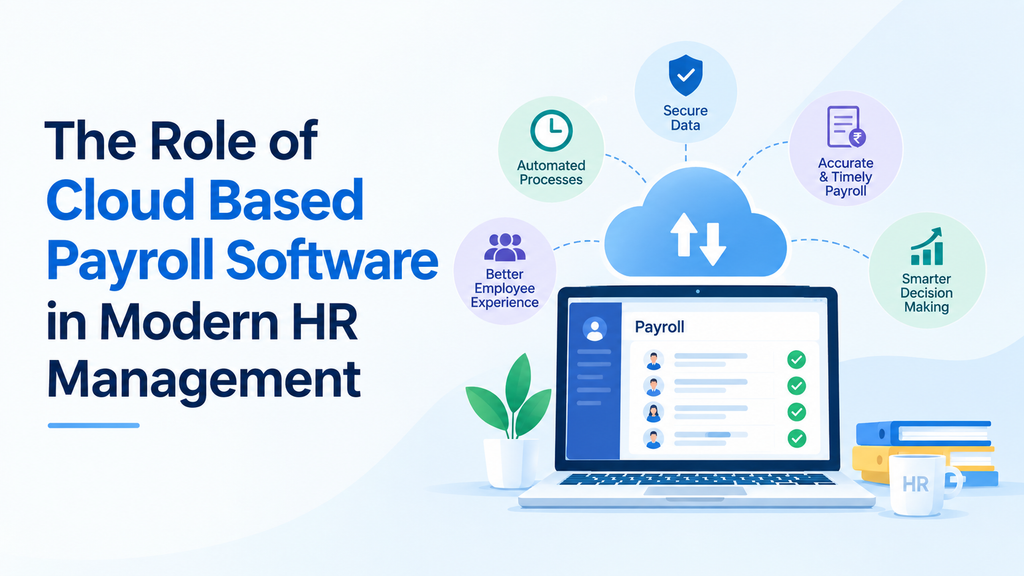
Human resource management has evolved significantly with the adoption of digital tools. From maintaining employee records to processing salaries and managing compliance, HR teams now rely on technology to reduce manual work and improve accuracy. Cloud Based Payroll Software has become an important part of this transformation by making payroll processes more accessible, automated, and organized.
What Is Cloud Based Payroll Software?
Cloud Based Payroll Software is a payroll management solution hosted online rather than installed on individual computers. HR professionals and authorized employees can access the system through an internet connection, allowing businesses to manage payroll information from different locations.
These systems can help organizations handle tasks such as salary calculations, attendance and leave data, payslip generation, deductions, tax-related calculations, and payroll reports. By bringing these processes together in one platform, HR teams can spend less time on repetitive administrative tasks.
How Cloud Based Payroll Software Supports Modern HR Management
1. Automates Repetitive Payroll Tasks
Payroll processing involves several recurring activities, including calculating salaries, deductions, allowances, and employee benefits. Automation can reduce the amount of manual data entry required from HR teams.
This can also help minimize calculation mistakes and create a more consistent payroll process.
2. Provides Easy Access to Payroll Information
Because the system is cloud-based, authorized HR personnel can access payroll information remotely. This is particularly useful for businesses with multiple offices, remote employees, or distributed HR teams.
Employees can also benefit when the software provides self-service features, allowing them to view payslips, attendance information, leave balances, and other relevant details without repeatedly contacting HR.
3. Improves Payroll Data Management
Maintaining payroll information across spreadsheets and separate files can become difficult as an organization grows. Cloud-based systems can centralize employee and payroll information, making it easier for HR professionals to organize and retrieve important records.
Centralized information can also support better reporting and help HR teams make decisions using more structured payroll data.
4. Helps HR Teams Manage Compliance
Payroll often involves statutory deductions, tax calculations, employee records, and other compliance-related responsibilities. Depending on the software and its configuration, automated features can help HR teams manage these requirements more systematically.
Businesses should ensure that their selected software is regularly updated according to applicable regulations and supports the specific compliance requirements of their location.
5. Supports Remote and Hybrid Work
Modern HR departments may need to manage employees working from different locations. Cloud-based payroll solutions allow authorized users to access payroll systems without being tied to a particular office computer.
This flexibility can make payroll administration more convenient for organizations that have adopted remote or hybrid working arrangements.
6. Enhances Employee Self-Service
Employee self-service is another important feature of modern HR technology. Depending on the platform, employees may be able to access their payslips, submit leave requests, review attendance information, or update certain personal details.
This reduces routine queries for HR departments and gives employees faster access to their own information.
7. Simplifies Payroll Reporting
HR managers often need reports related to salaries, deductions, attendance, employee costs, and payroll history. Cloud-based payroll platforms can provide reports and dashboards that make this information easier to review.
These reports can help management understand payroll expenses and support broader workforce planning.
The Importance of Payroll Software in Surat Businesses
Businesses operating in Surat may have employees with different salary structures, attendance patterns, and payroll requirements. Using payroll software in Surat can help local organizations organize salary processing and employee payroll records through a centralized digital system.
For growing companies, digital payroll management can be particularly useful when the number of employees increases and manual payroll administration becomes more time-consuming. Businesses should evaluate solutions based on their employee count, payroll requirements, reporting needs, integrations, and applicable statutory requirements.
What Should Businesses Look for in Cloud Payroll Software?
Before selecting a payroll solution, businesses should consider:
- Automated salary calculations
- Attendance and leave integration
- Employee self-service features
- Payslip generation
- Payroll reports and analytics
- Data security and access controls
- Statutory compliance support
- Integration with HR and accounting systems
- Scalability for future employee growth
- Reliable customer support
Conclusion
The role of payroll technology has expanded beyond simply calculating employee salaries. Cloud Based Payroll Software can help modern HR departments automate repetitive processes, centralize payroll information, support employee self-service, and access important payroll data more efficiently.
For businesses looking to modernize their HR operations, selecting a payroll platform that fits their workforce size, operational requirements, and compliance needs can be an important step toward creating a more organized payroll process.
