

Facility directors across the United States are under consistent pressure to do more with less. Budget cycles tighten, headcounts stabilize, and yet the physical footprint of managed assets grows more complex every year. Buildings age, compliance requirements expand, and the workforce maintaining those assets is increasingly distributed across multiple locations and shifts. In this environment, cost reduction is not a seasonal initiative — it is an ongoing operational discipline.
What separates organizations that achieve sustainable cost reductions from those that cycle through temporary fixes is not effort. It is the quality of the information they act on. Reactive operations — those that wait for equipment to fail, work orders to stack up, or audits to reveal gaps — consistently spend more than proactive ones. The question for facility directors is not whether to modernize how they manage operations. It is how to do so in a way that creates measurable, durable results rather than short-term improvements that fade when attention shifts.
This article outlines a structured framework for understanding where costs accumulate in facility operations, how technology creates the conditions for reduction, and what US facility directors should prioritize when building a case for operational change.
The Role of Centralized Operations in Controlling Facility Costs
Most facility operations do not fail because of individual mistakes. They fail because information is fragmented. Work orders live in one system, asset histories in another, vendor contracts in email threads, and inspection records in spreadsheets that only one person knows how to read. When data is disconnected, decision-making slows, errors compound, and costs accumulate in ways that are difficult to trace back to a root cause.
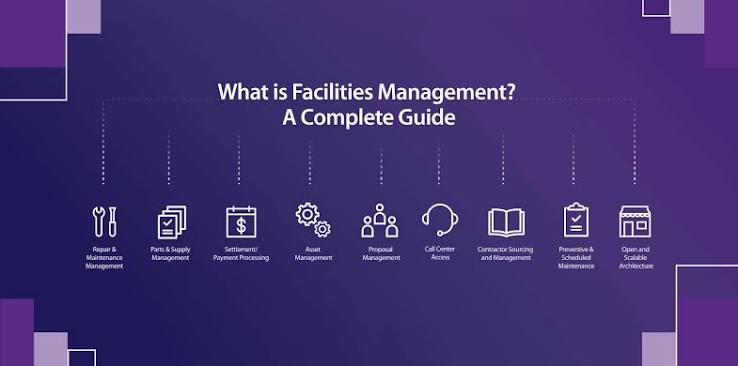
This is the fundamental problem that enterprise facility management software is designed to solve. By consolidating asset data, maintenance scheduling, work order management, vendor coordination, and compliance tracking into a single operational environment, these platforms give facility directors a complete picture of where resources are going and why. Organizations that have adopted integrated platforms consistently report cost reductions in the range of 25 to 30 percent over a two-to-three-year horizon — not because the software itself cuts costs, but because it eliminates the friction and duplication that generate unnecessary spending.
Centralization also changes how teams respond to operational events. When a technician can access full asset history from a mobile device before beginning a repair, they arrive prepared. When a supervisor can see all open work orders across multiple sites in one view, they can prioritize intelligently. These are not dramatic changes. They are incremental improvements that accumulate into significant cost differences over time.
Why Disconnected Systems Cost More Than They Save
Legacy systems are often defended on the grounds of familiarity. Teams know how to use them, and switching costs seem high. What this calculation consistently underestimates is the operational cost of running disconnected systems in parallel — the manual data entry, the reconciliation work, the errors introduced when information is transferred between platforms by hand, and the time spent searching for records that should be immediately accessible.
These costs are real but diffuse. They do not appear as a line item on a budget. They appear as overtime hours, extended equipment downtime, missed preventive maintenance windows, and vendor invoices that arrive without adequate context for approval. When facility directors begin to map where time is actually going across their teams, the cost of disconnection becomes visible — and the case for consolidation becomes straightforward.
Preventive Maintenance as a Cost Control Strategy
Reactive maintenance is inherently expensive. When equipment fails unexpectedly, the costs extend beyond the repair itself. There is the downtime cost, the emergency service premium, the potential for secondary damage caused by the failure, and the disruption to the people and operations that depended on that equipment functioning normally. In facilities with aging HVAC systems, complex electrical infrastructure, or food-grade or healthcare environments, a single unplanned failure can trigger cascading expenses that take weeks to resolve.
Preventive maintenance programs reduce this exposure by shifting the operational posture from reaction to anticipation. Scheduled inspections, condition-based service intervals, and regular lubrication and calibration cycles keep equipment performing within expected parameters and allow teams to plan repairs around operational schedules rather than around failures.
Scheduling Discipline and Its Long-Term Financial Impact
The financial case for preventive maintenance is well-established. According to the U.S. Department of Energy’s guidelines on building operations and maintenance, a well-implemented preventive maintenance program can reduce overall maintenance costs by 12 to 18 percent compared to reactive approaches. When combined with data-driven scheduling — where service intervals are adjusted based on actual equipment performance rather than fixed calendar dates — those savings extend further.
The challenge for most facility teams is execution consistency. Preventive maintenance schedules are easy to build and easy to defer when reactive demands compete for the same technician hours. Software platforms enforce scheduling discipline by generating work orders automatically, escalating overdue tasks, and tracking completion rates across teams and locations. This removes the human tendency to deprioritize scheduled work during busy periods — which is precisely when deferred maintenance causes the most damage.
Parts Inventory and Procurement Waste
Unmanaged parts inventory is one of the quieter cost drivers in facility operations. Teams that operate without visibility into what parts they have on hand tend to over-order out of caution, hold inventory that sits unused for years, and still find themselves short of critical components when equipment fails. The result is a combination of capital tied up in excess stock and emergency procurement costs when the right part is not available at the right time.
Integrated platforms connect work order history with parts usage data, giving procurement teams actual consumption patterns to work from rather than estimates. This tightens inventory levels, reduces carrying costs, and makes it possible to negotiate supplier agreements based on realistic volume projections.
Vendor and Contract Management at Scale
Facilities that rely on multiple vendors for specialty services — elevator maintenance, fire suppression systems, pest control, landscaping, janitorial services — carry a significant contract management burden. Each vendor relationship involves a scope of work, a pricing structure, a performance expectation, and a compliance requirement. Managing these relationships without a structured system leads to inconsistent service delivery, missed renewal windows, and payments made without adequate performance records to justify them.
At scale, vendor management inefficiency is expensive. Contracts renew automatically without renegotiation. Invoices are approved without verification that the work was completed to specification. Service gaps go undocumented because there is no consistent process for recording vendor performance. Over time, these gaps compound into relationships where the facility is paying market rate or above for service that does not meet the standard it is being invoiced for.
Using Performance Data to Improve Vendor Accountability
When vendor activity is tracked within a facility management platform — including service dates, completion records, response times, and inspection outcomes — facility directors have documented performance histories to reference during contract reviews. This shifts vendor conversations from anecdotal to data-supported. Vendors who consistently miss response windows, generate callbacks, or require rework can be identified and addressed. Those who perform reliably can be recognized and prioritized for preferred vendor status.
This accountability structure also reduces the cost of vendor transitions. When a relationship needs to end, a documented service history makes the handover to a new provider smoother and reduces the knowledge gap that typically increases costs during the transition period.
Compliance Tracking and the Cost of Regulatory Risk
Regulatory compliance in facility operations is not static. Requirements set by bodies such as the Occupational Safety and Health Administration govern inspection schedules, equipment certifications, and documentation standards across a wide range of facility types. For multi-site operations, maintaining consistent compliance across all locations is one of the most resource-intensive aspects of facility management.
The cost of non-compliance extends well beyond the fines themselves. Failed inspections can trigger operational shutdowns, require accelerated remediation work at premium cost, and create liability exposure that affects insurance premiums and organizational risk profiles. In healthcare, manufacturing, and food processing environments, regulatory failures carry additional reputational consequences that are difficult to quantify but real in their financial impact.
Automating Compliance Schedules Across Multiple Sites
Facility management platforms manage compliance calendars centrally, ensuring that inspection deadlines, certification renewals, and documentation requirements are tracked and surfaced before they become overdue. This is particularly valuable for organizations managing facilities across multiple states, where the regulatory environment varies and local compliance requirements can be difficult to track manually.
Automated compliance tracking reduces the administrative labor required to maintain regulatory readiness and virtually eliminates the category of costs that arise from missed deadlines. When compliance is built into the operational workflow rather than managed as a separate administrative process, the probability of oversight drops significantly.
Building a Cost Reduction Case for Facility Leadership
Facility directors who want to present a credible case for operational technology investment need to connect platform capabilities to specific cost categories. A general argument about efficiency rarely moves budget conversations. A specific analysis of where money is being lost — in reactive maintenance, vendor over-payment, excess inventory, compliance penalties, or administrative overhead — gives leadership something concrete to evaluate.
The most effective frameworks for this kind of analysis begin with a baseline audit. Before projecting what a platform will save, document what current operations actually cost. Track where technician hours go. Map which vendors are generating callbacks. Identify which pieces of equipment have the longest downtime histories. This data provides the foundation for a before-and-after comparison that is specific enough to be credible.
Once the baseline is established, the cost reduction projections become grounded in actual operational data rather than vendor benchmarks. The 30 percent figure that appears frequently in discussions of facility management optimization is achievable — but it is not automatic. It depends on implementation quality, user adoption, and the discipline to act on what the data reveals rather than simply collecting it.
Conclusion
Reducing operational costs in facility management is not a matter of cutting services or reducing maintenance frequency. It is a matter of eliminating the inefficiencies that make operations more expensive than they need to be — fragmented data, reactive maintenance cycles, undocumented vendor performance, and compliance managed as an afterthought rather than an operational constant.
The framework described here is not a shortcut. It requires investment in the right tools, clear operational processes, and leadership commitment to act on the information those tools provide. For US facility directors managing complex, multi-site operations under sustained cost pressure, this is not optional work. It is the work that determines whether an organization stays within budget or consistently exceeds it.
Organizations that approach this systematically — starting with a clear baseline, building toward centralized data, and enforcing operational discipline through technology — consistently achieve durable cost reductions. Those that approach it as a one-time project tend to see temporary improvements that fade. The difference is not the software. It is how seriously the organization commits to using what the software makes visible.
