

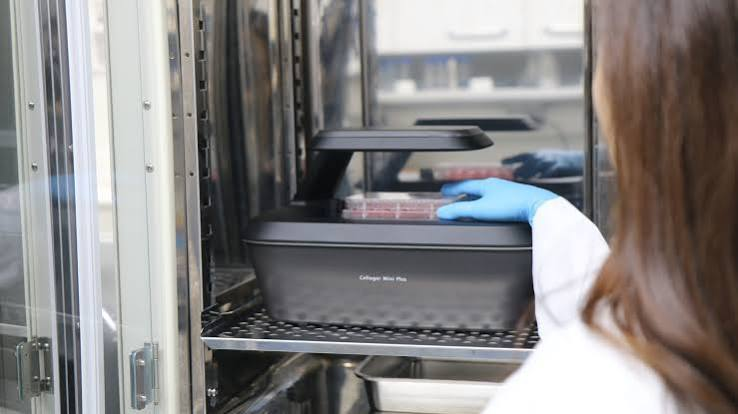
Purchasing decisions in laboratory settings rarely fail because of bad intentions. They fail because the evaluation process is built around the wrong questions. When a lab begins shopping for an automated cell imaging system, the conversation tends to center on image resolution, software features, and price. These are reasonable starting points, but they often crowd out the more consequential considerations — the ones that determine whether a system integrates smoothly into daily operations or becomes a recurring source of friction.
The consequences of a misaligned purchase show up slowly. Workflow bottlenecks emerge after installation. Compatibility issues surface when teams try to connect imaging data to downstream analysis tools. Maintenance cycles disrupt scheduling in ways nobody anticipated. None of this is inevitable, but it is common, and it tends to happen in labs that approached the decision as a product comparison rather than an operational fit assessment.
What follows is a practical look at seven areas where labs consistently misjudge what matters most — and why getting these right before purchase makes a measurable difference afterward.
1. Treating Throughput as a Primary Filter Rather Than a Contextual Variable
When evaluating an automated cell imaging system, many procurement teams begin by filtering options based on throughput capacity. The assumption is that higher throughput equals more capability, and more capability equals a better investment. In practice, throughput is a contextual specification — its value depends entirely on the workflow it’s meant to support. Referencing a reliable Automated Cell Imaging System guide early in the evaluation process can help labs reframe throughput as one variable among many, rather than the primary ranking criterion.
Why Over-Specifying Throughput Creates Downstream Problems
A system built to handle extremely high sample volumes requires proportionally robust support infrastructure — specialized consumables, dedicated IT storage, trained personnel for data management, and often a physical footprint that smaller or mid-sized labs haven’t accounted for. When a lab purchases beyond its actual operational demand, it doesn’t simply have unused capacity. It takes on maintenance obligations, software licensing tiers, and support agreements designed for a scale of use it may never reach. The system becomes expensive to run relative to the work it’s actually doing, and the complexity it adds rarely translates to proportional research value.
2. Underestimating Integration Complexity
An imaging system doesn’t operate in isolation. It sits inside a broader informatics environment that includes laboratory information management systems, data storage infrastructure, analysis platforms, and often multiple user roles with different access requirements. The technical compatibility between a new imaging system and an existing lab environment is not always straightforward, and vendors often present optimistic integration timelines that don’t account for the specific configuration of the purchasing lab.
The Real Cost of Integration Gaps
When imaging systems don’t communicate cleanly with existing platforms, labs develop workarounds. Data gets exported manually, reformatted, and re-uploaded. Metadata gets lost or inconsistently recorded. These workarounds consume staff time and introduce variability into datasets that are supposed to be controlled. Over months, the accumulated inefficiency can be significant — and it rarely appears in any pre-purchase evaluation because nobody thought to model for it.
3. Evaluating Software as a Secondary Consideration
Hardware gets most of the attention during vendor demonstrations, and understandably so. The physical components of an imaging system are visible, tangible, and easier to compare side by side. Software, by contrast, tends to be presented through curated demos that show the platform performing well under ideal conditions. What labs rarely see in those demonstrations is how the software behaves under real operational pressure — during batch processing, when files are large, when users with different skill levels are working simultaneously, or when the system needs to be updated mid-project.
Software Stability and User Adoption Are Linked
A powerful imaging system with unintuitive software will be underused. Researchers will default to manual methods or avoid features that require a learning curve they don’t have time for. Software that crashes unpredictably or requires frequent troubleshooting erodes confidence in the system as a whole, even when the hardware is performing correctly. Evaluating software means sitting with it under realistic conditions — not just watching a vendor walk through a prepared workflow.
4. Neglecting Vendor Support Structure Beyond the Sale
Post-sale support is one of the most underweighted factors in capital equipment decisions, particularly in research environments where downtime has real consequences. Labs often assume that once a system is installed and staff are trained, the relationship with the vendor becomes transactional — limited to occasional service calls. In reality, the quality and accessibility of ongoing support has a direct impact on system reliability over the life of the equipment.
What Responsive Support Actually Requires
Support responsiveness isn’t just about response time. It involves whether the support team understands the specific configuration of your system, whether replacement parts are stocked locally or require extended lead times, and whether software issues can be diagnosed remotely or require an on-site visit. These factors vary considerably between vendors, and they are worth investigating explicitly — not just accepting the vendor’s assurance that support is available. Asking for references from existing customers in similar operational contexts is one of the more reliable ways to assess this before committing.
5. Assuming Regulatory Readiness Is Vendor-Handled
Labs operating in regulated environments — clinical research, pharmaceutical development, diagnostics — often assume that purchasing a system from a reputable vendor is sufficient to satisfy compliance requirements. This assumption creates gaps. Regulatory alignment, such as conformance with standards outlined by bodies like the U.S. Food and Drug Administration for laboratory equipment used in clinical contexts, is a shared responsibility between the vendor and the purchasing lab. The vendor provides a system capable of meeting certain standards; the lab is responsible for implementing it in a way that actually meets those standards within its specific operational context.
Validation Is a Lab Responsibility, Not a Default Setting
Installing a system is not the same as validating it. Validation requires documented testing against defined acceptance criteria, and it must reflect the actual use conditions in the lab — not the conditions described in the vendor’s own validation documentation. Labs that treat vendor validation reports as transferable to their own environment often discover during audits that their documentation doesn’t satisfy regulators who want evidence of performance in the specific context of use. Building validation planning into the procurement process, before installation, is how this risk is managed.
6. Overlooking the Environmental and Facility Requirements
Automated cell imaging systems are sensitive instruments. They have environmental requirements that, if not met, affect performance in ways that can be difficult to trace back to root cause. Temperature stability, vibration isolation, humidity control, and electrical supply consistency all influence how reliably a system operates over time. These requirements are typically documented in the system specifications, but they are not always surfaced prominently in vendor conversations, and they are rarely part of standard facility assessments conducted by labs that are primarily focused on bench space and electrical outlets.
Facility Readiness Should Be Assessed Before Equipment Arrives
A lab that installs an imaging system in a space with inconsistent temperature regulation or vibration from nearby equipment may not immediately see performance problems. Drift and inconsistency tend to develop gradually, making them harder to attribute to environmental factors once the system has been running for months. Assessing the installation environment before equipment arrives — and making any necessary modifications as part of the procurement budget — prevents a category of problems that are expensive and frustrating to diagnose after the fact.
7. Treating Total Cost of Ownership as an Afterthought
Capital budgets for laboratory equipment typically focus on the purchase price, often with some allowance for installation and initial training. What they rarely model accurately is the total cost of operating the system over its expected lifespan. Consumables, maintenance contracts, software licensing renewals, staff training as personnel turn over, and eventual calibration or component replacement all contribute to the true cost of ownership — and they can represent a substantial portion of the total investment over a five or ten-year period.
Operating Cost Modeling Changes Purchase Decisions
When labs compare two systems primarily on purchase price and one is significantly cheaper upfront, it appears to be the more financially responsible choice. If the less expensive system has higher consumable costs, a more restrictive maintenance contract, or software licensing structured around usage volume, the five-year cost comparison may favor the more expensive system. This kind of modeling is not complicated, but it requires gathering specific cost data from vendors — not just headline pricing — and it requires finance and procurement teams to engage with operational context they often don’t have access to without input from scientific staff.
Closing: What a More Disciplined Evaluation Looks Like
The errors described throughout this article share a common root cause: procurement processes that prioritize visible specifications over operational fit. Resolution, throughput, and price are easy to compare in a spreadsheet. Integration complexity, software stability, vendor support structure, and environmental requirements are harder to quantify but more consequential to how a system actually performs once it’s in use.
A more disciplined evaluation starts by mapping current and anticipated workflow before engaging vendors. It includes conversations with facilities teams, IT, and regulatory affairs — not just scientific staff and procurement. It involves asking vendors for evidence of real-world performance in similar lab environments, not just curated demonstrations. And it builds total cost modeling into the decision framework from the beginning rather than treating operational costs as something to figure out after installation.
Automated cell imaging technology has advanced considerably, and the systems available today are genuinely capable instruments. The labs that get the most out of them aren’t necessarily the ones that purchased the most advanced option. They’re the ones that took the time to understand what they actually needed, matched that need to the right system, and set the conditions for reliable use before the equipment arrived. That discipline, more than any single feature or specification, is what separates a successful implementation from one that becomes a source of ongoing operational difficulty.
