

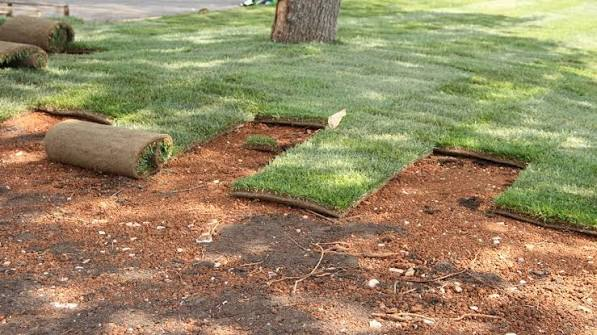
Installing sod is one of those home improvement decisions that looks straightforward until something goes wrong. A failed installation — uneven seams, poor root establishment, dead patches within weeks — is not just a visual problem. It means tearing out work, starting over, and spending money twice. For homeowners making this decision, the real challenge is not finding a company that offers the service. It is finding one that will do it correctly, stand behind the result, and communicate clearly from estimate to completion.
The sod installation market in the United States is fragmented. There are regional landscaping firms, general contractors who list sod as a secondary offering, and dedicated lawn installation specialists, all competing for the same work. Understanding the difference between them, and knowing what to ask before signing anything, is the foundation of a sound decision. This guide walks through the core factors that matter — not in theory, but in practice.
What Kind of Company You Are Actually Dealing With
When homeowners search for sod installation companies, the results often surface a wide mix of providers — some focused exclusively on lawn establishment, others operating as general landscaping businesses that treat sod as one line item among many. This distinction matters more than it appears. A company that specializes in sod work will have established relationships with regional sod farms, a crew trained specifically in grading and laying technique, and a track record of results specific to local soil and climate conditions.
Reviewing structured directories of sod installation companies by service area can help homeowners quickly identify which providers are categorized as specialists versus generalists. This is a useful starting point before making direct contact with any firm.
Specialty Versus General Landscaping Providers
A general landscaping company may offer sod installation, but their primary revenue often comes from lawn maintenance contracts, tree work, or hardscaping. When sod is not their core focus, it can reflect in lower investment in equipment, less experienced labor on the sod crew specifically, and less structured quality control after installation. This does not disqualify them, but it does raise the bar for what a homeowner should verify before hiring.
A specialty provider, by contrast, typically works at higher volume in sod-specific work. They move through more projects annually, which means they encounter and solve a broader range of soil and grading problems. Their crews develop a rhythm that affects both speed and precision. For a homeowner with a straightforward yard, this difference might be minimal. For a yard with drainage issues, slopes, or compacted clay soil, specialty experience often translates directly into better outcomes.
Regional Knowledge and Sod Variety Selection
Sod variety selection is not a minor detail. Different grass types — warm-season varieties like Bermuda or Zoysia, cool-season types like tall fescue or Kentucky bluegrass — perform entirely differently depending on climate zone, sun exposure, and soil type. A competent sod installation company will ask about your yard’s conditions before recommending a variety. If a company leads with price and never asks about sun exposure or soil drainage, that is a sign they are selling a product rather than solving a problem.
The United States Department of Agriculture maintains regional climate zone data that informs which grass types establish successfully in a given area. A company that references regional climate considerations in their estimate process is demonstrating working knowledge of this, not just filling in a quote template.
Evaluating Credentials, Insurance, and Accountability
Credentials in the lawn and landscaping industry vary by state. Some states require a contractor’s license for landscape work above a certain value; others do not. Regardless of licensing requirements, every company performing work on your property should carry general liability insurance and workers’ compensation coverage. This is not a formality. If a crew member is injured on your property and the company lacks workers’ compensation, you can face liability. If equipment damages underground utilities, general liability determines who absorbs the cost.
How to Verify Coverage Without Taking Someone’s Word for It
Requesting a certificate of insurance directly from a company’s insurer — not from the company itself — is the only reliable verification method. A legitimate company will not hesitate to have their insurer issue a certificate naming you as the certificate holder for the duration of the project. Any reluctance around this request is a signal worth paying attention to.
Beyond insurance, industry affiliation can provide a baseline of accountability. Membership in organizations like the National Association of Landscape Professionals indicates that a company has agreed to professional standards of conduct and may have access to ongoing education in installation practices and safety protocols.
What a Legitimate Estimate Process Looks Like
The estimate process tells you more about a company’s operational standards than the number at the bottom of the page. A properly structured estimate for sod installation should require a site visit. Surface area measurement is part of it, but the more experienced the company, the more time they spend assessing what is underneath and around the yard — existing grade, soil composition, irrigation coverage, and drainage patterns.
Scope Clarity and What Gets Left Out
One of the most common sources of conflict between homeowners and sod installation companies is scope ambiguity. An estimate that lists only square footage and sod type leaves significant room for dispute. Does the price include old lawn removal? Soil amendment? Grading corrections? Starter fertilizer? Watering instructions or a follow-up inspection?
A well-structured estimate itemizes each phase of the work and specifies what is and is not included. When comparing quotes from multiple companies, aligning on scope is more important than comparing raw totals. A lower number that excludes soil preparation and debris removal is not a savings — it is a deferred cost that typically shows up after installation when root establishment fails.
Timeline and Seasonal Considerations
Sod installation is time-sensitive in ways that distinguish it from most other home improvement work. Sod begins to degrade quickly after harvest, and installation timing relative to temperature and moisture conditions directly affects root establishment. A company that books work without regard for seasonal conditions — scheduling cool-season sod in peak summer heat, for instance — is prioritizing their schedule over the outcome of your project.
When discussing timelines, ask how far in advance the company orders sod from their supplier, how they handle delivery delays, and what their protocol is if weather conditions deteriorate between scheduling and installation day. The answers to these questions reveal how closely they manage the details that most affect success.
References, Past Work, and Honest Reputation Assessment
Online reviews are a starting point, not a conclusion. For sod installation specifically, reviews written shortly after completion often reflect initial appearance rather than long-term results. Sod looks good in the first week if it is installed on reasonably prepared ground. Whether it survives and establishes well is a question that takes thirty to sixty days to answer. Reviews written at six weeks or later, particularly those that comment on root development and regrowth after the first mow, carry more weight than day-of testimonials.
Asking for References That Match Your Project Type
When requesting references, be specific. Ask for contacts from projects completed in the past season, on properties similar in size or complexity to yours. A reference from a commercial property installation is not particularly useful if you are installing sod on a residential backyard with a slope. A company willing to provide three to five references from comparable residential work, and whose past clients can speak to how the company handled problems that arose, is demonstrating a level of transparency that reflects operational maturity.
If a company cannot or will not provide verifiable references, that absence of accountability should factor into your decision regardless of how competitive their pricing appears.
Post-Installation Support and What It Signals About a Company
The quality of a sod installation becomes clear in the weeks following the work. Root establishment depends on watering consistency, mowing timing, and foot traffic management — factors that a homeowner controls but that a good company will have communicated clearly in writing before they leave the job site. The presence or absence of structured post-installation guidance is a meaningful indicator of how seriously a company treats the full outcome of their work.
Warranty Terms and Follow-Up Protocols
Sod warranties vary significantly between providers. Some companies offer replacement guarantees for sod that fails to establish within a specified window, provided the homeowner followed watering guidelines. Others offer no warranty at all. Understanding what warranty is in place — and what conditions trigger or void it — should be part of every homeowner’s pre-contract review.
Beyond formal warranties, ask whether the company schedules a follow-up visit or check-in call after installation. Companies that do are managing their reputation through outcome, not just transaction. Those that disappear after the final payment tend to leave homeowners without recourse when issues emerge in the establishment phase.
A Closing Framework for Making the Decision
Choosing among sod installation companies is ultimately a judgment call, but that judgment should be grounded in consistent criteria rather than price alone. The companies that produce reliable, lasting results tend to share a common profile: they specialize in or heavily prioritize sod work, they visit the site before quoting, they itemize their scope clearly, they carry proper insurance, and they have a track record of satisfied clients who can speak to results beyond installation day.
The homeowners who end up re-doing sod work rarely chose a company randomly. They made a decision based on incomplete information — usually because they did not know what questions to ask, or because they weighted cost over process. This framework is not about finding the most expensive option. It is about understanding what signals indicate a company that will do the work correctly the first time, stand behind it, and communicate clearly throughout. That combination — competence, accountability, and communication — is what separates a project that delivers long-term value from one that creates additional problems down the road.
