

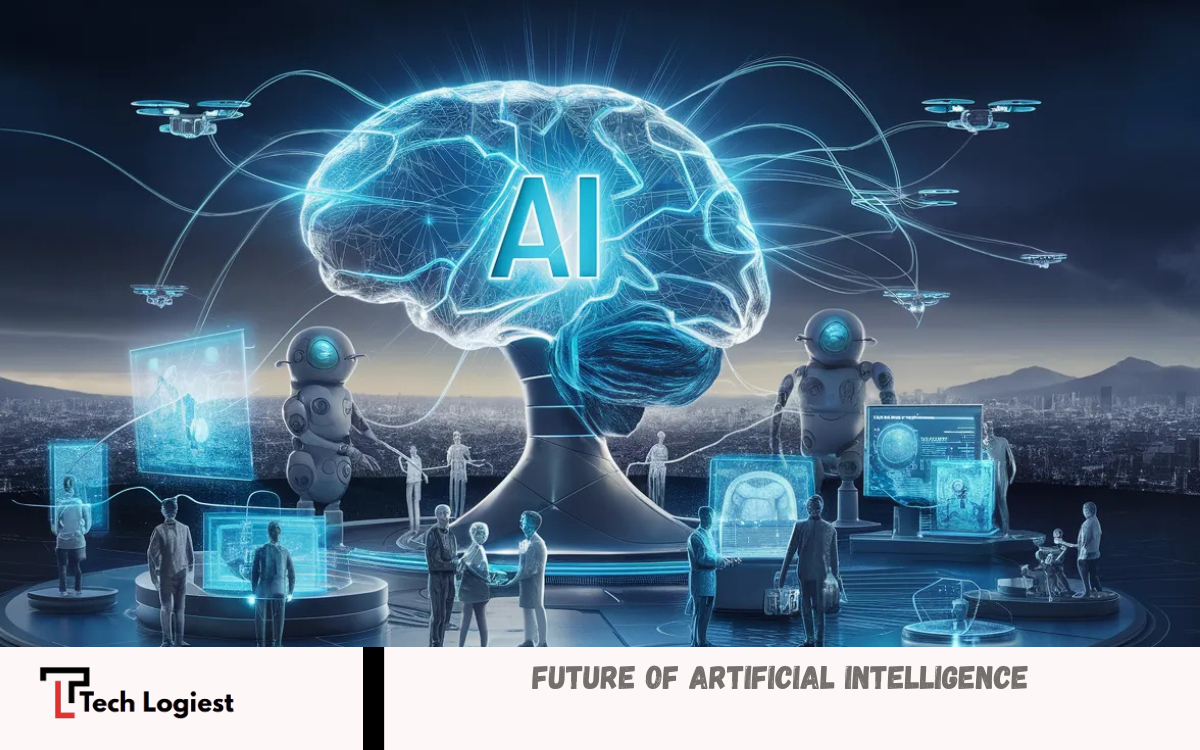
The future of Artificial Intelligence (AI) is set to transform the way we live, work, and interact with the world around us. As technology continues to evolve, AI is becoming more advanced, accessible, and integrated into everyday life. From healthcare and education to business and transportation, AI is expected to enhance efficiency, accuracy, and decision-making processes.
In the coming years, AI will play a major role in automating routine tasks, allowing humans to focus on more creative and strategic activities. Intelligent systems will become more personalized, understanding human behavior and preferences to provide better services and experiences.
Evolution Driving the Future of Artificial Intelligence
The future of Artificial Intelligence builds upon decades of technological progress. Early rule-based systems have evolved into sophisticated models capable of learning patterns, recognizing speech, interpreting images, and generating human-like responses. Continuous improvements in computational power, cloud infrastructure, and big data availability accelerate this transformation.
Deep learning, neural networks, and natural language processing form the backbone of modern AI systems. These technologies enable machines to analyze vast datasets, identify trends, and make predictions with remarkable accuracy. As research continues, AI systems will become more autonomous, requiring minimal human intervention.
Key Trends Shaping the Future of Artificial Intelligence
1. Automation Across Industries
Automation will dominate the future of Artificial Intelligence. Businesses will increasingly rely on AI systems to handle repetitive tasks, streamline workflows, and reduce operational costs. Manufacturing, logistics, finance, and customer service sectors already experience significant transformation through AI-powered automation.
2. Personalized User Experiences
AI systems will deliver highly personalized experiences by analyzing user behavior, preferences, and interactions. From recommendation engines to virtual assistants, personalization will enhance customer satisfaction and engagement. Businesses leveraging AI-driven personalization will gain a strong competitive edge.
3. Expansion of AI in Healthcare
The future of Artificial Intelligence in healthcare promises improved diagnostics, treatment planning, and patient care. AI-powered tools will assist doctors in identifying diseases at early stages, predicting health risks, and optimizing treatment strategies. This advancement will increase accuracy while reducing healthcare costs.
4. Smart Cities and Infrastructure
AI will play a critical role in developing smart cities. Intelligent traffic management systems, energy-efficient buildings, and predictive maintenance solutions will enhance urban living. Governments will adopt AI technologies to improve public services and infrastructure management.
5. Human-AI Collaboration
Rather than replacing humans entirely, the future of Artificial Intelligence emphasizes collaboration. AI systems will augment human capabilities, enabling professionals to focus on creativity, innovation, and strategic thinking. This partnership will redefine workplace dynamics.
Read Also: Dropshipping Business Guide
Opportunities in the Future of Artificial Intelligence
The future of Artificial Intelligence offers immense opportunities across multiple sectors. Businesses adopting AI early will benefit from increased efficiency, improved decision-making, and enhanced customer experiences.
Economic Growth
AI will contribute significantly to global economic growth. By optimizing processes and reducing inefficiencies, organizations can achieve higher productivity levels. New business models and revenue streams will emerge, driven by AI innovation.
Job Creation
Although automation may replace certain roles, the future of Artificial Intelligence will also create new job opportunities. Demand for AI specialists, data scientists, and technology professionals will increase. Upskilling and reskilling initiatives will become essential for workforce adaptation.
Innovation Acceleration
AI will accelerate innovation across industries. From drug discovery to climate modeling, AI systems will enable faster problem-solving and breakthrough discoveries. Organizations investing in AI research will lead technological advancement.
Improved Decision-Making
AI systems will provide data-driven insights, enabling organizations to make informed decisions. Predictive analytics will help businesses anticipate market trends, customer behavior, and potential risks.
Challenges in the Future of Artificial Intelligence
Despite its potential, the future of Artificial Intelligence presents several challenges that require careful consideration.
Ethical Concerns
AI systems must operate within ethical boundaries. Issues such as bias, discrimination, and lack of transparency can undermine trust. Developers must ensure fairness, accountability, and inclusivity in AI design.
Data Privacy and Security
AI relies heavily on data. Protecting user data and ensuring privacy will remain a critical challenge. Organizations must implement robust security measures to prevent data breaches and misuse.
Job Displacement
Automation may lead to job displacement in certain sectors. Workers performing repetitive tasks face the highest risk. Governments and organizations must develop strategies to support workforce transition.
Regulatory Frameworks
The future of Artificial Intelligence requires clear regulations to ensure responsible usage. Policymakers must establish guidelines that promote innovation while protecting public interest.
Role of Artificial Intelligence in Business Transformation
Businesses across industries will increasingly adopt AI to drive transformation. AI-powered tools will optimize supply chains, improve customer service, and enhance marketing strategies. Predictive analytics will enable companies to identify opportunities and mitigate risks effectively.
Customer support systems powered by AI will provide instant responses, improving user satisfaction. Marketing teams will leverage AI to analyze consumer behavior and create targeted campaigns. Financial institutions will use AI for fraud detection, risk assessment, and investment analysis.
Future of Artificial Intelligence in Education
Education systems will experience significant transformation through AI integration. Intelligent tutoring systems will provide personalized learning experiences, adapting to individual student needs. AI-driven analytics will help educators identify learning gaps and improve teaching methods.
Virtual classrooms, automated grading systems, and AI-based content creation tools will enhance educational efficiency. Students will benefit from interactive and engaging learning environments, preparing them for future challenges.
Artificial Intelligence and Global Impact
The future of Artificial Intelligence will influence global development. AI technologies will address complex challenges such as climate change, healthcare accessibility, and resource management. Governments and international organizations will collaborate to leverage AI for sustainable development.
AI-powered solutions will improve disaster response, optimize energy consumption, and enhance agricultural productivity. These advancements will contribute to a more sustainable and resilient world.
Preparing for the Future of Artificial Intelligence
Organizations and individuals must prepare for the evolving AI landscape. Continuous learning and skill development will become essential. Businesses should invest in AI infrastructure, research, and talent acquisition.
Educational institutions must update curricula to include AI-related subjects, ensuring students acquire relevant skills. Governments should promote innovation while implementing policies that address ethical and social concerns.
Frequently Asked Questions
Is Artificial Intelligence safe for society?
AI can be safe if developed and used responsibly. Proper regulations, ethical guidelines, and data protection measures are essential to ensure safety and fairness.
What industries will benefit the most from AI?
Healthcare, finance, education, manufacturing, and transportation will benefit significantly from AI through automation, predictive analytics, and improved efficiency.
How will AI change education?
AI will enable personalized learning, automated grading, and intelligent tutoring systems. Students will receive customized educational experiences based on their learning needs.
What are the main challenges of Artificial Intelligence?
Key challenges include data privacy concerns, ethical issues, job displacement, and lack of clear regulations for AI development and usage.
Can Artificial Intelligence think like humans?
AI can simulate human thinking and decision-making but does not possess emotions or true consciousness. It relies on data and algorithms to function.
How will AI affect daily life in the future?
AI will simplify daily activities through smart assistants, automated services, personalized recommendations, and improved healthcare and transportation systems.
What skills are needed for an AI-driven future?
Skills such as data analysis, programming, critical thinking, problem-solving, and adaptability will be essential to succeed in an AI-driven world.
Conclusion
The future of Artificial Intelligence holds transformative potential across every aspect of society. From business and healthcare to education and global development, AI will redefine how systems operate and interact. While challenges such as ethical concerns, data privacy, and job displacement require attention, the opportunities far outweigh the risks.
With responsible implementation, strategic planning, and continuous innovation, Artificial Intelligence will serve as a powerful tool for progress.
