

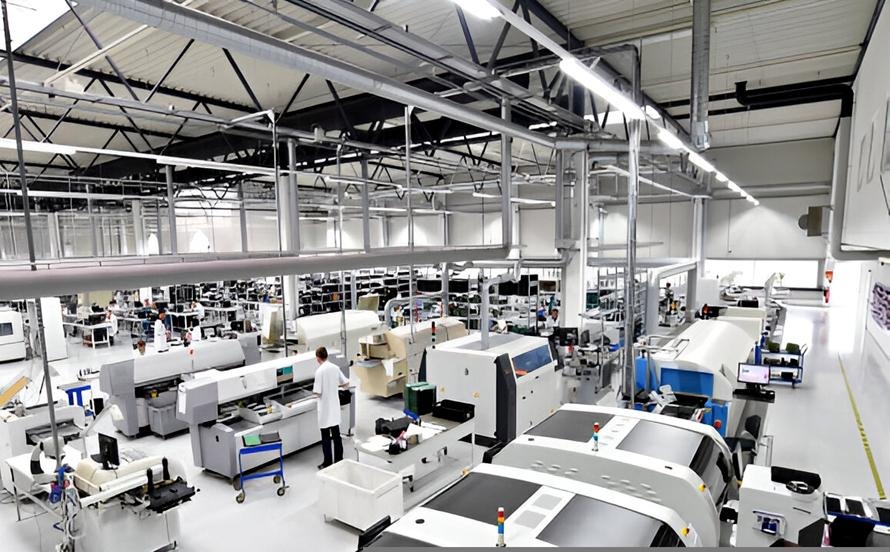
Modern electronic products often require more than a properly assembled printed circuit board. A finished product may also include cables, connectors, enclosures, displays, switches, power supplies, mechanical components, and other hardware. Coordinating all these elements separately can make manufacturing more complicated and increase the workload involved in bringing an electronic product to completion. Box build manufacturing provides a way to combine these activities into a more organized production process.
Box build assembly refers to the process of integrating assembled PCBs with mechanical and electrical components to create a complete electronic product or subassembly. Depending on the application, the process can include PCB assembly, cable and wire integration, enclosure assembly, labeling, programming, configuration, inspection, and functional testing. This approach allows manufacturers to move beyond individual circuit boards and produce a more complete, ready-to-use electronic system.
What Is Box Build Manufacturing?
Box build manufacturing involves assembling multiple electronic and mechanical elements into a finished enclosure or system. The assembled PCB is usually an important part of the product, but it is only one component of the overall manufacturing process.
A typical project may involve installing a PCB inside a plastic or metal enclosure and connecting it to switches, displays, fans, power supplies, connectors, or other components. Depending on the product, the manufacturer may also install wiring harnesses, labels, heat sinks, or other mechanical parts.
The exact assembly process depends on the design and application. Some products may require relatively simple enclosure integration, while others may involve complex electromechanical assemblies with multiple circuit boards and extensive wiring.
How the Box Build Process Works
The process generally begins with a review of the product’s engineering documentation. Drawings, bills of materials, assembly instructions, wiring diagrams, and testing requirements provide the information needed to understand how the finished product should be constructed.
PCB assemblies are prepared before being integrated into the larger product. Mechanical components and enclosures are also inspected to ensure that they meet the required specifications.
During system integration, the PCB and other components are installed into the enclosure. Cables and connectors are routed according to the design, while mechanical components are secured in their designated positions.
After assembly, the completed unit can undergo visual inspection and functional testing. Depending on the product, testing may include power-up verification, electrical measurements, software or firmware programming, communication testing, and simulation of operating conditions.
Why Box Build Assembly Is Important
A completed electronic product requires many individual parts to work together correctly. Managing PCB assembly, mechanical integration, cabling, and testing through separate suppliers can create additional coordination requirements.
Using an integrated box build manufacturing approach can simplify this process by allowing a single manufacturing partner to manage multiple production stages. This can reduce the number of suppliers involved and provide a centralized point of communication.
It can also make production planning easier. Instead of receiving an assembled PCB and arranging additional enclosure and wiring work internally, companies can receive a more complete product that is ready for further integration, packaging, or distribution.
Combining PCB and Mechanical Assembly
One of the defining characteristics of box build production is the combination of electronic and mechanical manufacturing. The PCB must function correctly, but it must also fit properly within the physical structure of the product.
Mechanical tolerances, mounting points, cable routing, ventilation, heat dissipation, and access to connectors can all affect the final assembly.
Early collaboration between the product designer and manufacturer can help identify potential integration problems. For example, an enclosure may need modification if a component interferes with a mounting point or if a cable requires additional routing space.
Addressing these issues during the design stage can help reduce assembly delays and rework.
Cable and Wire Integration
Cables and wiring are often essential parts of a complete electronic system. Poor cable routing can create mechanical stress, interfere with other components, or make maintenance more difficult.
During integrated product assembly, cables can be cut, terminated, labeled, and installed according to the approved wiring documentation. Connectors can then be attached to the appropriate PCB or system interfaces.
Proper cable management can contribute to product reliability and make future servicing easier. Manufacturers may also perform continuity or electrical tests to verify that wiring connections are correctly installed.
Enclosure and Component Installation
The enclosure protects internal electronics while providing the physical structure of the finished product. It can be made from materials such as plastic, aluminum, steel, or other engineered materials depending on the application.
During box assembly, the manufacturer may install displays, switches, connectors, fans, heat sinks, brackets, and other components into the enclosure. The PCB is then mounted and connected according to the product design.
The installation process needs to account for both mechanical stability and electrical safety. Components should be securely positioned, while wiring and connectors should remain accessible where required.
Testing a Complete Electronic Product
Testing becomes especially important when multiple electronic and mechanical elements are combined into one system. A PCB may pass its individual electrical tests but still encounter problems after being installed in the finished enclosure.
Functional testing can help verify the performance of the complete product. Depending on the application, testing may include power consumption measurements, input and output verification, communication checks, display operation, switch functionality, sensor testing, and software validation.
Manufacturers can develop test procedures based on the product’s technical requirements. Documented testing can also provide useful quality records for production batches.
Benefits for OEMs and Product Developers
Integrated box build production can provide several benefits for original equipment manufacturers and product developers. It can reduce the number of manufacturing stages that need to be coordinated internally and allow companies to focus more heavily on product development and market activities.
It can also support production scalability. A manufacturer may produce prototypes and small batches during the development phase before increasing volumes after the design has been validated.
Centralizing assembly can further simplify inventory management because fewer partially completed products may need to be stored and transferred between facilities.
Applications of Box Build Assembly
Box build manufacturing is used in many industries where electronic systems require both PCB assemblies and mechanical integration. Industrial automation equipment can include control boards, power systems, displays, and mechanical enclosures within one product.
Medical equipment may combine electronic circuits with displays, sensors, switches, and protective housings. Telecommunications and networking products can also require multiple PCBs, cables, connectors, cooling systems, and enclosures.
Consumer electronics, test equipment, security systems, energy equipment, and transportation electronics are other areas where integrated product assembly can be valuable.
Choosing an Experienced Manufacturing Partner
The quality of the final product depends on more than PCB assembly alone. A manufacturing partner should have experience with PCB production, mechanical integration, cable assembly, enclosure installation, inspection, and functional testing.
Companies should also consider the manufacturer’s production capacity and ability to handle both prototypes and larger production runs. Clear technical documentation is essential for ensuring that every component is installed according to the intended design.
Communication is equally important. Engineering changes, component substitutions, enclosure revisions, and testing requirements should be documented and managed throughout production.
As electronic products continue to combine sophisticated circuitry with mechanical structures, integrated manufacturing can help simplify the path from PCB to finished product. An experienced box build assembly Service provider can coordinate PCB integration, wiring, enclosure installation, inspection, and functional testing to deliver complete electronic systems that are ready for their intended application.
