

In high-traffic food service environments, the speed and consistency of drink service rarely gets the same operational attention as food preparation or staffing. Yet in venues ranging from sports arenas and hotel banquet halls to fast-casual restaurants and corporate cafeterias, slow or inconsistent drink service quietly erodes throughput, increases waste, and contributes to staff fatigue in ways that compound over time.
The problem is not always visible in a single transaction. It shows up in longer queue times, over-poured portions, inconsistent product quality across shifts, and the cumulative cost of labor spent on tasks that could be handled more efficiently. For venue operators managing tight margins and high guest expectations, these inefficiencies represent a real and measurable drag on performance — one that many are now addressing through changes to how drinks are produced and delivered at scale.
What Beverage Dispensing Machines Actually Do in an Operational Context
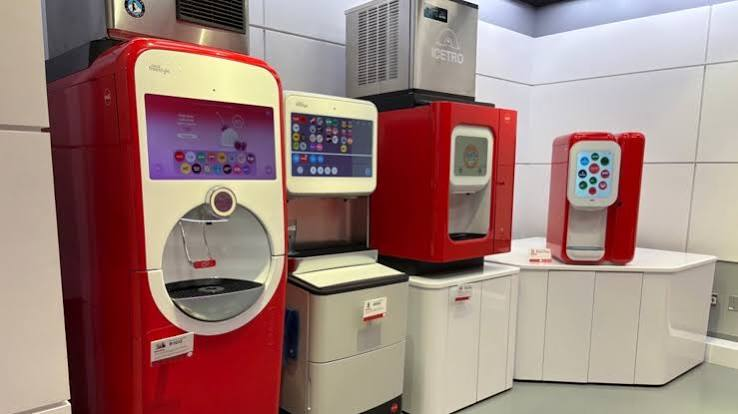
The term “beverage dispensing” often gets treated as a narrow equipment category, but in practice it covers a wide range of systems that automate the production and delivery of drinks — from carbonated soft drinks and juices to beer, wine, spirits, and non-alcoholic specialty beverages. Modern beverage dispensing machines are designed around one core requirement: delivering the right product, at the right volume, with the same result every time — regardless of who is operating them or how busy the service environment is.
This consistency has direct operational value. When a venue relies entirely on manual preparation, the quality of every drink is dependent on staff skill, attention, and workload at any given moment. During peak service windows, those variables produce results that are harder to control. A dispensing system removes most of those variables by standardizing the output at the point of delivery rather than the point of training.
The Difference Between Consistency and Uniformity
It is worth distinguishing between a system that produces uniform output and one that produces consistent quality. Uniform simply means the same every time. Consistent means the same correct result every time — accounting for product integrity, temperature, carbonation, and portion accuracy across a full service period. This distinction matters because a poorly configured system can be uniformly wrong. The operational benefit of dispensing equipment comes not from automation alone, but from automation that is set up to maintain the standards a venue has defined for its product.
For venues that serve beverages under brand licensing agreements or franchise standards, this is not optional. Maintaining approved specifications for product delivery is a contractual and reputational requirement, and manual preparation at scale introduces risk into that compliance.
Integration With Service Flow
One of the less-discussed advantages of centralized dispensing systems is how they interact with the broader structure of a venue’s service environment. When drink preparation is separated from drink delivery — with production happening at a fixed point and staff focused on distribution — the overall workflow becomes easier to manage. Bottlenecks are easier to identify, stations are easier to staff, and the demands placed on individual team members are more predictable. This has a downstream effect on training time, onboarding complexity, and shift-to-shift operational reliability.
Where the Hidden Costs of Manual Service Actually Accumulate
The phrase “hidden cost” is sometimes used loosely, but in the context of drink service, the costs are specific. They accumulate in ways that do not always appear on a single line item in a P&L report, which is part of why they persist longer than they should.
Portion Inconsistency and Product Waste
In a manual service environment, over-pouring is one of the most consistent sources of product loss. Across a high-volume venue operating multiple shifts per week, even small deviations per pour add up to a significant volume of product that was purchased, stored, and prepared but never sold. This is particularly relevant for venues serving premium beverages where the cost of each unit of product is higher and the margin for waste is narrower.
Dispensing equipment addresses this by controlling pour volume at the point of delivery. The result is not just less waste — it is more accurate cost-of-goods calculation, which supports better purchasing decisions and more reliable financial forecasting.
Labor Allocation and Staff Attention
Preparing drinks manually requires attention. In a busy environment, that attention has to come from somewhere, and often it comes from tasks that directly affect guest experience — order accuracy, communication, speed of overall service. When staff are occupied with the mechanical components of drink preparation, their capacity to manage the relational and logistical demands of service is reduced.
This is not an argument for removing human involvement from beverage service. It is an argument for structuring that involvement more thoughtfully. Dispensing systems handle the repetitive, high-frequency component of drink production, which allows staff to focus on the parts of service that benefit from human judgment and attention.
Training Time and Turnover Risk
The food service industry operates with consistently high turnover rates, a reality well documented by organizations tracking labor trends across the sector, including the U.S. Bureau of Labor Statistics. Every new hire represents a training investment, and in environments where drink preparation involves multiple products, varying preparation methods, and quality standards that must be maintained under pressure, that investment is significant.
Dispensing systems reduce the skill threshold required for consistent drink production. A new team member can learn to operate a dispensing station in a fraction of the time it would take to train them to consistently hand-prepare the same range of products. In a high-turnover environment, that reduction in training time has real financial value across a full year of operations.
The Conditions That Make Switching to Dispensing Equipment Practical
Not every venue is in a position to transition away from manual beverage preparation, and the decision to invest in dispensing infrastructure is not appropriate for all service models. But there are specific operational conditions under which the shift becomes not just practical but financially justified.
Volume Thresholds and Peak Service Pressure
The efficiency gains from dispensing systems become most pronounced at volume. A venue serving a modest number of guests per service period may not generate enough throughput to justify the infrastructure cost. But once a venue reaches the point where drink service is a measurable constraint on overall throughput — where the speed of drink production limits table turns, creates queue pressure, or forces staffing decisions — the math changes.
At that scale, the system pays for itself not just through reduced waste or faster preparation, but through the additional revenue capacity that faster, more reliable service creates.
Multi-Location Operations and Brand Consistency
For operators managing multiple locations, dispensing equipment offers a different kind of value: standardization across sites. When every location produces beverages through the same system, configured to the same specifications, the output at one location is reliably comparable to another. This matters for brand consistency, for customer expectations, and for the ability to apply operational improvements uniformly rather than location by location.
Franchise operators and hospitality groups with multiple properties have found this particularly useful as they scale, because it removes one significant variable from the complexity of managing distributed teams and service environments.
Event-Driven and Seasonal Service Models
Venues that experience concentrated demand — stadiums, event centers, hotel ballrooms, outdoor festivals — face a specific challenge: they need to serve large numbers of guests in a compressed timeframe, often with staffing that is partly seasonal or event-specific. In this context, consistency and speed are not just operational preferences; they are requirements. Dispensing systems support high-volume event service in a way that manual preparation cannot match reliably, especially when the team operating the service changes from event to event.
Evaluating the Transition: What Operators Should Consider Before Committing
A decision to invest in dispensing infrastructure should start with an honest assessment of current operational performance, not with equipment specifications. The relevant questions are about workflow, not hardware.
• Where in the current service flow does drink preparation create the most friction or slowdown during peak periods?
• How much product waste is occurring across a typical service week, and how is it being tracked?
• How long does it currently take to train new staff to a consistent standard for beverage preparation?
• What is the cost of staffing the beverage production function relative to the revenue it generates?
• Are there brand, franchise, or contractual standards for beverage quality that are difficult to maintain consistently with manual preparation?
These questions surface the actual problem before any equipment decision is made. They also make it easier to evaluate whether the investment addresses a real operational need or simply adds complexity in a different form.
Closing Perspective
The shift toward automated beverage service in US venues is not driven by novelty or a preference for technology over people. It is driven by the practical limits of manual preparation at scale — limits that become increasingly difficult to manage as volume increases, turnover continues, and guest expectations remain high.
Beverage dispensing equipment does not replace judgment, hospitality, or the human elements of service. It takes over the mechanical, repetitive components of drink production so that the people involved in service can direct their attention where it has more impact. For operators who have accepted slow or inconsistent drink service as an unavoidable part of running a busy venue, the more useful question is not whether dispensing systems work — they do, reliably, in documented applications across the industry — but whether the current cost of not using them is one that the business can continue to absorb.
In most high-volume environments, a clear-eyed look at that cost suggests the answer is no.
