

Artificial intelligence and 3D printing are transforming the way people create physical objects. From customized figures and product prototypes to creative decorations and educational models, 3D printing is allowing more ideas to move from digital concepts into real-world applications.
However, creating a high-quality printed model involves more than simply generating a 3D shape. During the transition from digital design to physical production, creators often face practical challenges. A model may look detailed on screen but lose visual quality after printing. Complex color designs can be difficult to reproduce, and large models may require complicated manual preparation before they can be printed.For creators, the challenge is not only how to generate a model, but also how to make that model look better, print more efficiently, and maintain the original creative intention.
Hi3D focuses on improving this complete AI 3D printing workflow. By combining AI texturing, multi-color printing support, and intelligent model separation, Hi3D helps creators transform AI-generated ideas into more realistic, flexible, and printable 3D models.
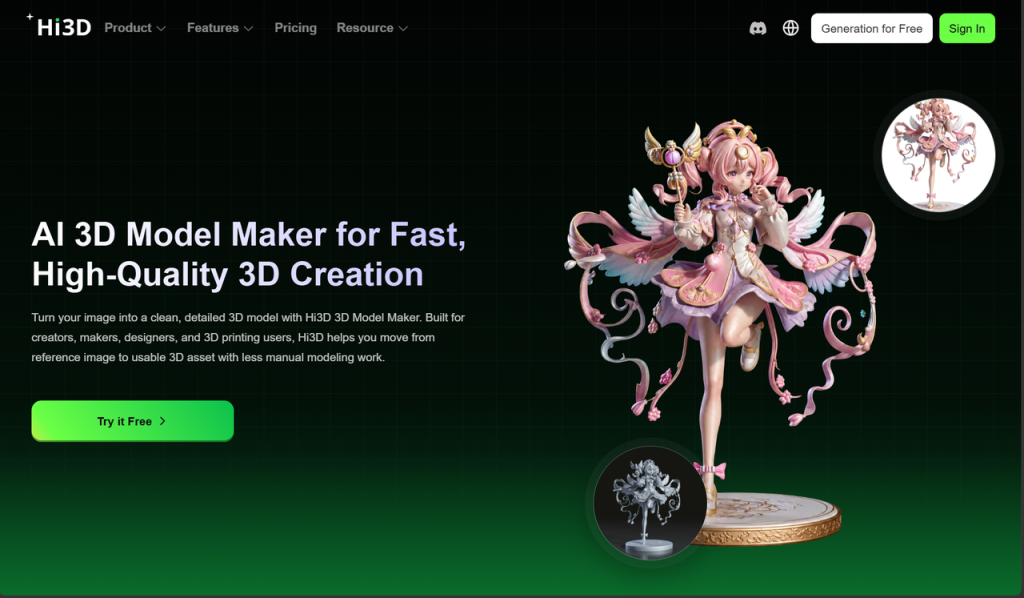
1. The Challenges Between AI Model Generation and Real 3D Printing
AI has made 3D model creation faster and more accessible, but generating a model is only the beginning of the process.
A successful 3D printing workflow requires creators to consider appearance, color, structure, and printing limitations. Without proper optimization, the final physical object may look different from the original digital design.
1.1 Digital Models Often Need More Realistic Details
A 3D model’s quality depends not only on its shape but also on its surface appearance. Details such as material effects, patterns, and textures strongly influence how realistic the final object looks.
Traditional texture creation often requires professional skills and additional design software. For many creators, adding realistic details after generating a model becomes another technical challenge.
1.2 Complex Color Designs Are Difficult to Reproduce Physically
Many AI-generated models contain rich colors and detailed visual elements. However, traditional 3D printing workflows can make it difficult to maintain these details.
Creators may need to manually manage different colors, materials, and printing settings. Without proper preparation, a colorful digital design may become a simple or less detailed physical object.
1.3 Large Models Require More Flexible Printing Solutions
Another common challenge appears when printing large or complex models.A model that looks perfect digitally may exceed the size limitations of a 3D printer. Detailed structures may also require additional support or manual adjustments.
To solve these problems, creators need tools that can prepare models for practical printing rather than only generating digital designs.
2. AI Texturing: Creating More Realistic AI-Generated 3D Models
Surface details play an important role in making a 3D model visually complete. A character, product prototype, or decorative object needs more than accurate geometry; it also needs realistic textures and materials.
Hi3D provides AI-powered texture generation technology to help creators improve the appearance of their models.
2.1 Adding Rich Surface Details Through AI Technology
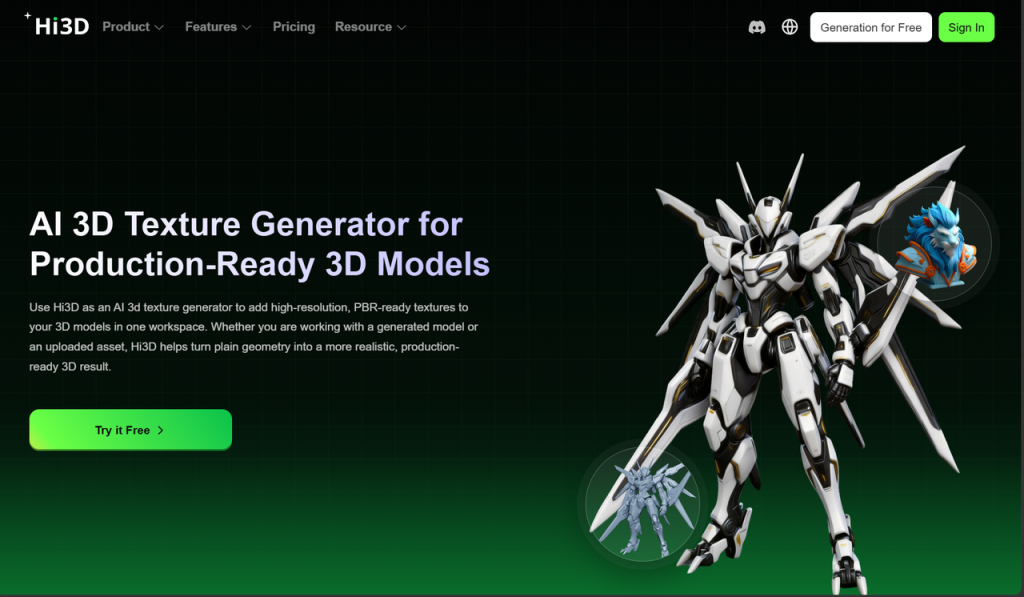
Through AI texturing, Hi3D helps enhance generated models by adding more detailed visual information.Instead of manually creating every texture element, creators can use AI assistance to improve the model’s appearance and make it closer to their original design concept.
An AI 3D texture generator provides a more efficient way to create realistic surface effects, helping users save time during the design process.
2.1.1 Improving Creative Results with AI 3D Model Texturing
For different types of 3D projects, texture quality can significantly influence the final result.For example, a collectible figure may require detailed clothing patterns, material effects, and character features. A product prototype may need realistic surface appearances to better communicate its design concept.
With AI 3D model texturing, creators can enhance these details more efficiently and create models with stronger visual impact.The combination of AI-generated geometry and AI-powered textures creates a more complete digital creation experience before printing.
3. Multi-Color Printing: Bringing Digital Designs Closer to Physical Objects
Color is one of the most important elements that connects digital models with real-world products.Whether creating personalized gifts, character figures, or artistic models, accurate color representation helps preserve the original creativity behind a design.
However, transforming colorful digital models into physical prints remains a challenge for many users.
3.1 Maintaining More Design Details During Printing
Traditional 3D printing often requires creators to simplify colors because of limitations in materials and printing processes.For example, an AI-generated character may include different clothing colors, accessories, and visual details. Without proper preparation, these elements may not be accurately represented after printing.
Hi3D focuses on making multi-color printing workflows more practical, helping creators maintain more of the original visual design.
3.2 Expanding Possibilities for Personalized and Creative Projects
Multi-color printing provides more opportunities for creators across different fields.
For artists, it allows digital characters and illustrations to become more expressive physical objects.For designers, colorful prototypes can communicate concepts more clearly during development.For personal creators, customized models can better reflect individual styles and creative ideas.By supporting richer visual results, Hi3D helps move 3D printing beyond simple single-color objects toward more personalized creations.
4. Smart Model Separation: Making Complex 3D Printing More Flexible
Large and detailed models often require special preparation before printing. Printing everything as one piece may not always be practical because of printer size limitations or structural complexity.
Hi3D provides intelligent model separation features to help creators prepare models more effectively.
4.1 Breaking Large Designs into Manageable Components
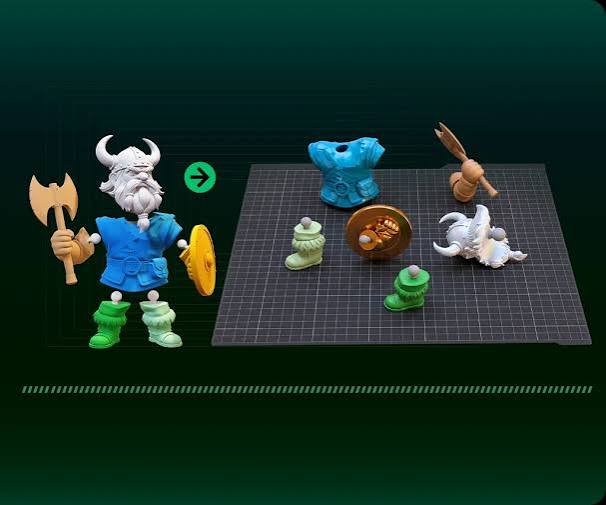
Smart separation allows complex models to be divided into suitable parts, making printing and assembly easier.
For example,a image to 3D model can be separated into different components such as the head, body, arms, and accessories. Each part can then be printed individually and assembled afterward.This approach provides more flexibility for creators who want to produce larger or more detailed models.
4.2 Improving Printing Efficiency and Creative Control
Separating models into multiple parts offers several practical advantages.Creators can optimize each section individually, reduce printing limitations, and make future modifications easier.
For example, if a character’s accessory needs to be redesigned, creators only need to update one component instead of recreating the entire model.This workflow is especially useful for collectible designers, prototype developers, and hobby creators who frequently work with complex models.
5. Real-World Applications: From AI Designs to Physical Creations
The value of Hi3D becomes clearer when applied to real creative scenarios.
A designer can generate a product concept, improve its appearance through AI texturing, prepare colors through multi-color printing support, and optimize the structure through smart separation.
A creator developing collectible figures can produce models with richer details and more accurate visual effects. A small business can explore customized products without depending entirely on traditional modeling processes.
These applications demonstrate that AI 3D creation is not only about making models faster. It is about creating a smoother connection between imagination, digital design, and physical manufacturing.
6. Hi3D Anniversary Celebration: Explore Advanced AI 3D Printing with 70% Off
The future of 3D printing depends on making the entire creation process more efficient, from digital design to final production.
Hi3D helps creators overcome common challenges through AI-powered technologies, including AI texturing, multi-color printing support, and intelligent model separation. These features allow users to create models with better visual quality, more flexible structures, and stronger connections between digital concepts and physical objects.
To celebrate its anniversary, Hi3D is offering a special 70% off discount. Whether you are a designer, artist, or 3D printing enthusiast, this is an opportunity to experience a smarter AI-powered workflow and explore new possibilities in 3D creation.
