

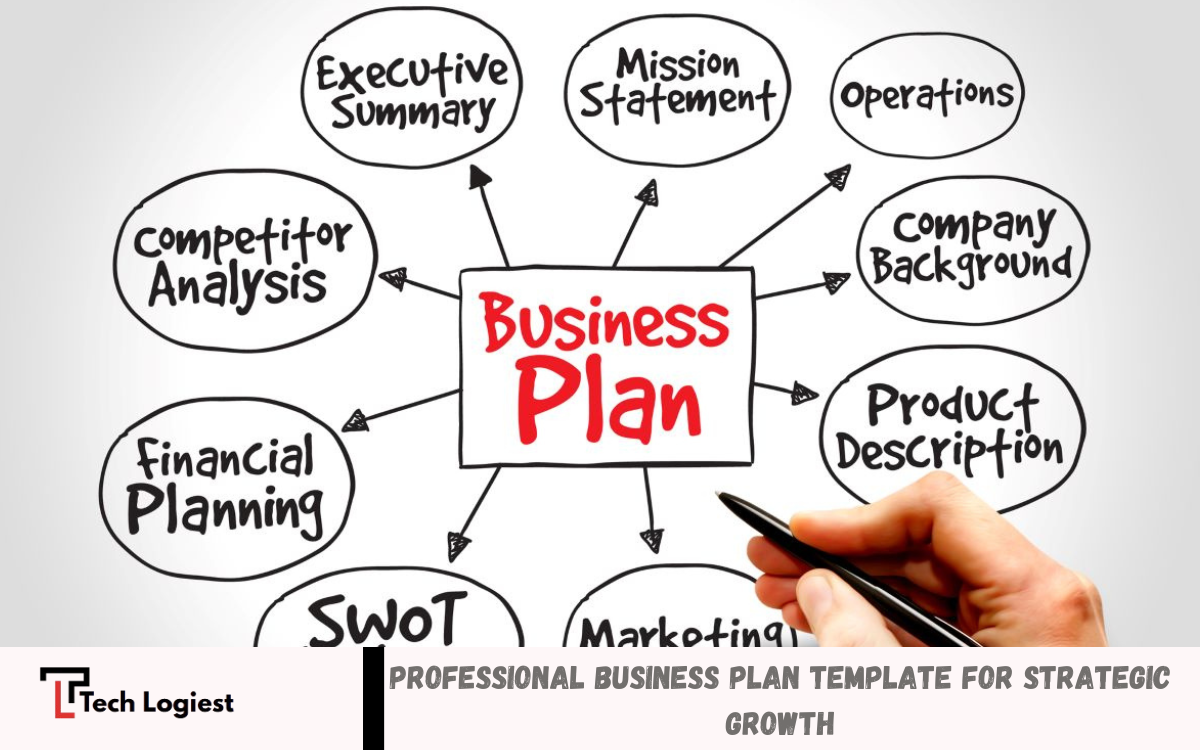
A business plan template is a structured document designed to help entrepreneurs, startups, and established businesses create a clear roadmap for success. It provides a standardized framework for outlining business goals, strategies, financial projections, target markets, and operational plans.
Whether launching a new company, seeking investment, applying for a loan, or planning future growth, a well-crafted business plan serves as an essential decision-making tool. It helps stakeholders understand the company’s vision, mission, competitive advantages, and revenue model.
What Is a Business Plan Template?
A business plan template is a predesigned document that includes the sections required for business planning. Templates help entrepreneurs create comprehensive plans without starting from scratch.
A professional business plan template typically includes:
- Executive Summary
- Company Description
- Market Analysis
- Products and Services
- Marketing Strategy
- Sales Plan
- Organizational Structure
- Financial Projections
- Funding Requirements
- Risk Assessment
- Growth Strategy
Templates provide consistency, organization, and clarity throughout the planning process.
Importance of a Business Plan Template
Business planning plays a critical role in organizational success. A well-structured template offers numerous advantages.
Strategic Direction
Clear goals create focus and improve decision-making throughout business operations.
Funding Opportunities
Investors and lenders require detailed business plans before providing financial support.
Market Understanding
Research-driven planning improves customer targeting and competitive positioning.
Financial Management
Financial projections support budgeting, forecasting, and profitability analysis.
Risk Reduction
Potential challenges become easier to identify and address through structured planning.
Performance Measurement
Defined objectives enable progress tracking and business evaluation.
Essential Components of a Business Plan Template
Executive Summary
The executive summary provides a concise overview of the entire business plan.
Key elements include:
- Business concept
- Mission statement
- Products or services
- Market opportunity
- Financial highlights
- Growth objectives
Although placed first, many entrepreneurs write this section after completing the remaining sections.
Company Description
This section explains business identity and operational purpose.
Include:
- Business name
- Legal structure
- Industry overview
- Vision statement
- Mission statement
- Business objectives
- Unique value proposition
A strong company description communicates purpose and competitive advantage.
Market Analysis
Market analysis demonstrates understanding of industry conditions and customer demand.
Topics include:
- Industry trends
- Market size
- Target audience
- Customer demographics
- Customer behavior
- Market opportunities
- Competitive landscape
Comprehensive research strengthens credibility and supports strategic planning.
Products and Services
Describe offerings clearly and professionally.
Important details include:
- Product features
- Service benefits
- Pricing strategy
- Product lifecycle
- Innovation advantages
- Customer value
Focus on solutions addressing customer needs and market demand.
Marketing Strategy
Marketing strategies drive customer acquisition and brand awareness.
Common marketing channels include:
- Search engine optimization
- Content marketing
- Social media marketing
- Email campaigns
- Paid advertising
- Referral programs
- Partnership marketing
A strong marketing strategy supports sustainable revenue growth.
Sales Strategy
Sales planning outlines customer conversion methods.
Include:
- Sales process
- Distribution channels
- Lead generation methods
- Pricing model
- Customer retention strategy
- Revenue objectives
Clear sales systems improve consistency and profitability.
Organizational Structure
This section explains leadership, management, and workforce organization.
Include:
- Ownership structure
- Management team
- Employee roles
- Organizational chart
- Hiring plans
- Leadership expertise
Strong management teams increase investor confidence.
Read Also: Top Online Business Ideas for Sustainable Growth
Financial Plan
Financial planning represents one of the most important sections.
Include:
Revenue Forecast
Projected income generated through business activities.
Profit and Loss Statement
Expected revenues, expenses, and profitability.
Cash Flow Forecast
Projected cash movement across operational periods.
Balance Sheet
Assets, liabilities, and equity overview.
Break-Even Analysis
Revenue point where expenses equal income.
Financial planning demonstrates sustainability and growth potential.
Funding Requirements
Businesses seeking external financing should provide detailed funding information.
Include:
- Required funding amount
- Purpose of funding
- Allocation strategy
- Repayment plans
- Investment opportunities
- Growth projections
Investors expect transparency and realistic projections.
Risk Analysis
Every business faces potential challenges.
Common risks include:
- Market competition
- Economic fluctuations
- Regulatory changes
- Supply chain disruptions
- Technology shifts
- Customer demand changes
Risk analysis demonstrates preparedness and strategic thinking.
Types of Business Plan Templates
Different business situations require different planning approaches.
Startup Business Plan Template
Designed for new ventures seeking investment, partnerships, or operational guidance.
Features include:
- Market validation
- Financial projections
- Funding requirements
- Growth strategies
Small Business Plan Template
Suitable for local businesses and growing enterprises.
Focus areas include:
- Operations
- Marketing
- Revenue planning
- Customer acquisition
Strategic Business Plan Template
Supports long-term organizational growth.
Includes:
- Corporate objectives
- Performance metrics
- Expansion strategies
- Competitive positioning
One-Page Business Plan Template
Provides a concise business overview.
Useful for:
- Investor pitches
- Internal planning
- Business presentations
Operational Business Plan Template
Focuses on daily business management.
Includes:
- Processes
- Staffing
- Production
- Logistics
Benefits of Using a Business Plan Template
Time Savings
Templates eliminate unnecessary formatting and organizational tasks.
Professional Structure
Industry-standard layouts improve presentation quality.
Improved Accuracy
Guided sections reduce omissions and planning errors.
Better Communication
Clear documentation improves stakeholder understanding.
Easier Funding Approval
Professional business plans increase investor confidence.
Scalability
Templates support future growth and expansion planning.
How to Create a Business Plan Using a Template
Step 1: Define Business Goals
Establish measurable objectives for growth, revenue, market share, and customer acquisition.
Step 2: Conduct Market Research
Gather information regarding:
- Industry trends
- Competitors
- Customer preferences
- Market opportunities
Step 3: Develop Financial Projections
Create realistic forecasts supported by research and operational assumptions.
Step 4: Outline Marketing Strategy
Identify customer acquisition channels and promotional activities.
Step 5: Build Organizational Framework
Define leadership roles and staffing requirements.
Step 6: Assess Risks
Identify threats and mitigation strategies.
Step 7: Review and Refine
Update information regularly to maintain relevance and accuracy.
Common Business Plan Mistakes
Many entrepreneurs reduce effectiveness through avoidable errors.
Unrealistic Financial Projections
Overly optimistic forecasts damage credibility.
Limited Market Research
Insufficient data weakens strategic decisions.
Poor Competitive Analysis
Ignoring competitors creates strategic disadvantages.
Vague Objectives
Unclear goals reduce accountability and focus.
Missing Risk Assessment
Unidentified risks increase vulnerability.
Outdated Information
Regular updates maintain plan effectiveness.
Best Practices for Business Planning
Successful business plans share several characteristics.
Maintain Clarity
Simple language improves understanding.
Use Reliable Data
Accurate research strengthens credibility.
Focus on Customer Needs
Customer-centered planning increases market relevance.
Set Measurable Goals
Performance tracking improves accountability.
Update Regularly
Business environments evolve continuously.
Prioritize Financial Accuracy
Reliable financial data supports strategic decisions.
Business Plan Template Example Structure
A professional business plan template may follow this format:
- Executive Summary
- Company Overview
- Mission Statement
- Market Analysis
- Competitive Analysis
- Products and Services
- Marketing Strategy
- Sales Strategy
- Organizational Structure
- Financial Plan
- Funding Requirements
- Risk Assessment
- Growth Strategy
- Appendices
This structure creates a comprehensive business roadmap suitable for startups, small businesses, and growing enterprises.
Future Trends in Business Planning
Modern business planning continues to evolve through technological innovation.
Emerging trends include:
- Artificial intelligence forecasting
- Data-driven decision-making
- Real-time financial modeling
- Digital collaboration platforms
- Predictive analytics
- Automated reporting systems
Organizations adopting advanced planning methods gain competitive advantages and operational efficiency.
Frequently Asked Questions
What sections should a business plan template include?
A complete business plan template typically includes an executive summary, company overview, market analysis, products or services, marketing strategy, financial plan, funding requirements, and risk assessment.
Can a business plan template help secure funding?
Yes. Investors and lenders often require a detailed business plan to evaluate business viability, growth potential, and financial projections before providing funding.
How long should a business plan be?
The length depends on business complexity. Most professional business plans range from 10 to 30 pages, while one-page business plans provide a concise overview.
How often should a business plan be updated?
Business plans should be reviewed and updated at least annually or whenever significant changes occur in market conditions, business goals, or operations.
What is the difference between a startup business plan and a small business plan?
A startup business plan focuses on launching a new venture and attracting investors, while a small business plan emphasizes operations, growth, and profitability for an existing business.
Are business plan templates suitable for all industries?
Yes. Business plan templates can be customized for industries such as technology, retail, healthcare, manufacturing, education, hospitality, and professional services.
What are common mistakes when using a business plan template?
Common mistakes include unrealistic financial forecasts, insufficient market research, vague business goals, poor competitive analysis, and failing to update the plan regularly.
Conclusion
A business plan template is a powerful tool for transforming ideas into structured, actionable strategies. Professional planning improves decision-making, supports funding efforts, strengthens market positioning, and creates a foundation for sustainable growth. Clear objectives, detailed market research, realistic financial projections, and effective operational strategies contribute significantly to long-term success.
Whether launching a startup, managing a small business, or expanding an established organization, a comprehensive business plan template provides guidance, clarity, and direction.
